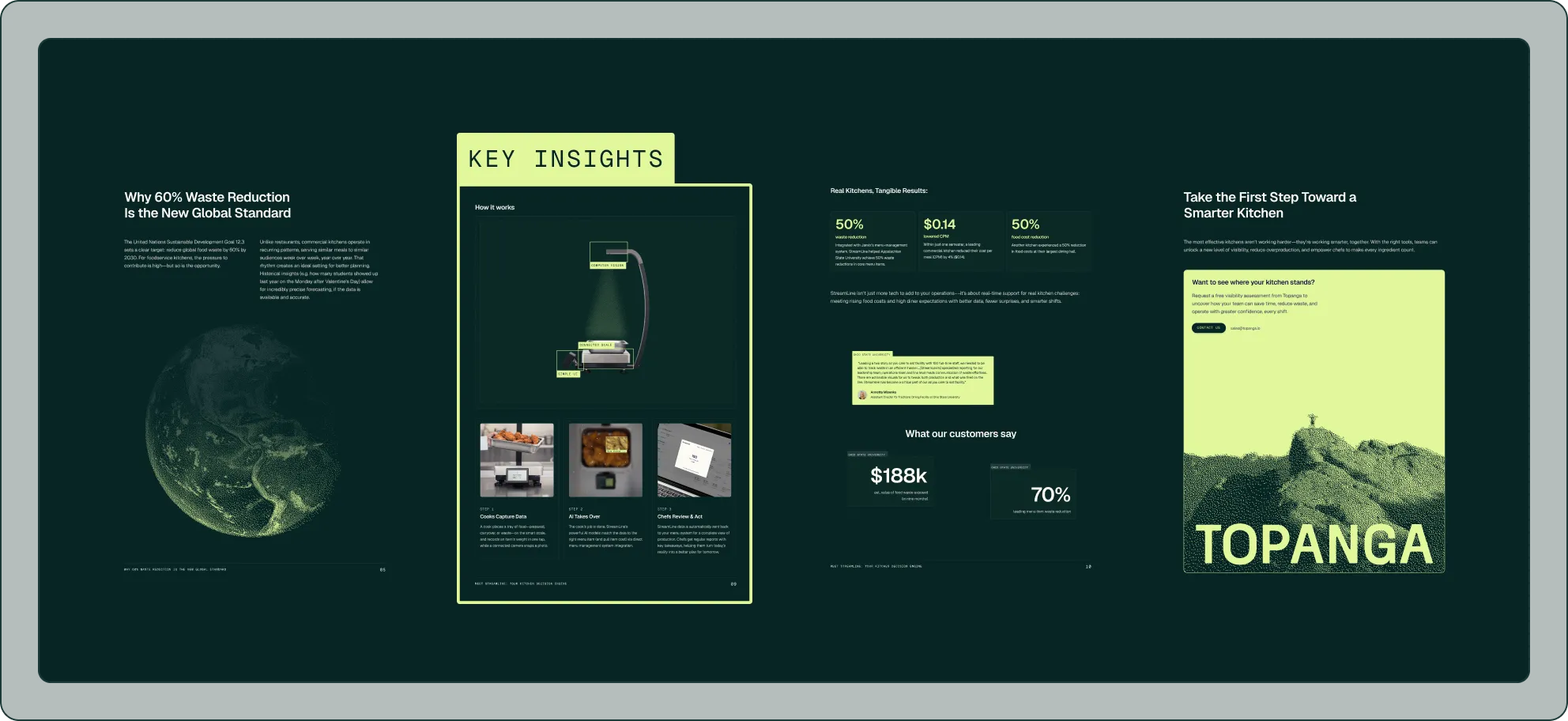
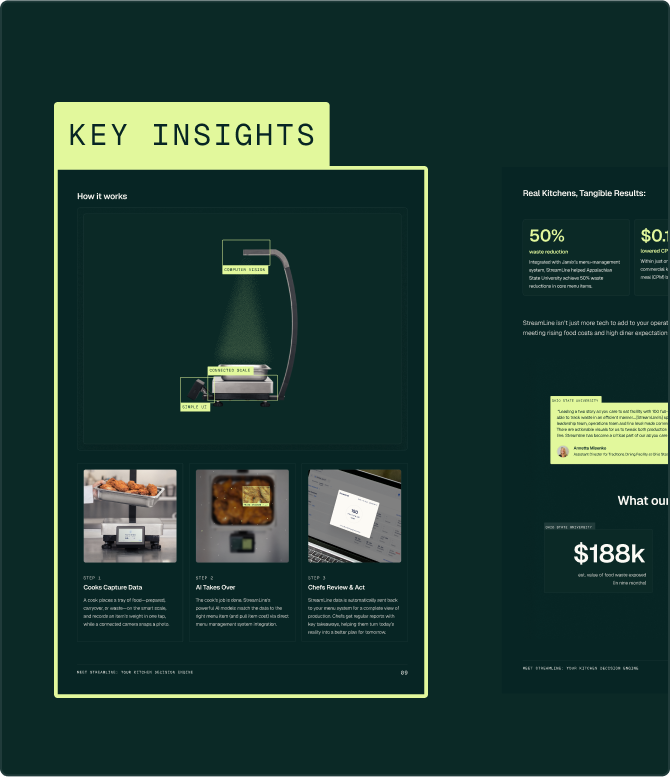
Leading Universities Just Proved 50% Food Waste Is Optional
Inside how universities like Appalachian State did it: capturing data from prep through post-service to cut costs by $0.14 per meal and eliminate production guesswork.

Executive Summary
Commercial kitchens today stand at a pivotal intersection. On one hand, they’re expected to deliver consistent, delicious meals that accommodate a wide range of dietary needs and preferences. On the other, they must meet increasingly urgent goals related to food costs, labor optimization, and environmental sustainability.
Expectations are rising—from diners, administrators, stakeholders, and sustainability leaders—but so are the tools available to meet them. Artificial intelligence (AI), accurate data, and modern kitchen platforms are finally giving chefs and foodservice directors control over every ingredient, every portion, and every dollar.
This paper explores how leading kitchens are making the shift from manual chaos to confident, data-backed control by embracing smarter systems. With the right technology and reliable data capture, they’re not just reducing waste and increasing efficiency; they’re replacing guesswork with clarity across every phase of the food journey, and empowering kitchen teams each step of the way.