
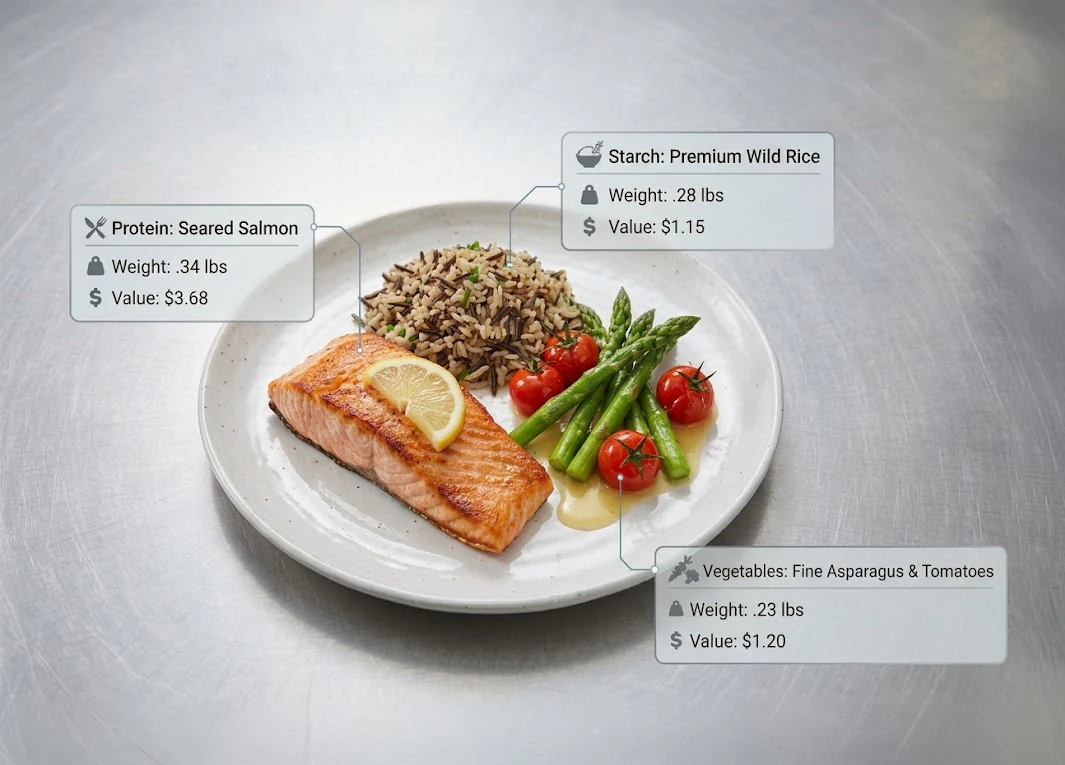


Your dining hall has a big blind spot
College students leave about 112 lbs of food on their plates every school year.
Teams need a frictionless way to understand what diners aren’t eating.

Manual Tracking
Expecting busy students to record their own plate waste is a sure path to low adoption (and useless data).

Lack of Insights
You may see plates of untouched chicken rolling down the dishbelt, but don't have context on why there are leftovers.
Smart Data, Sharp Menus, and
Clean Plates
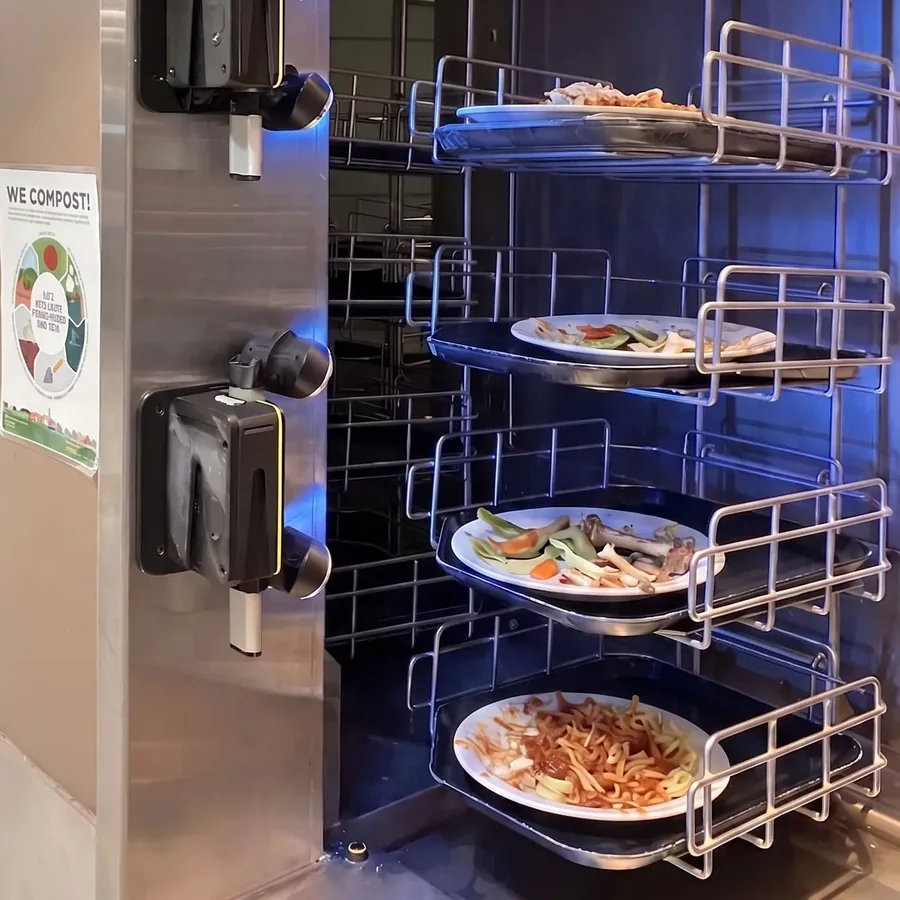

Invisible, Hands-Free Tracking
Get accurate data about what students took but didn’t eat without relying on them to self-scan.
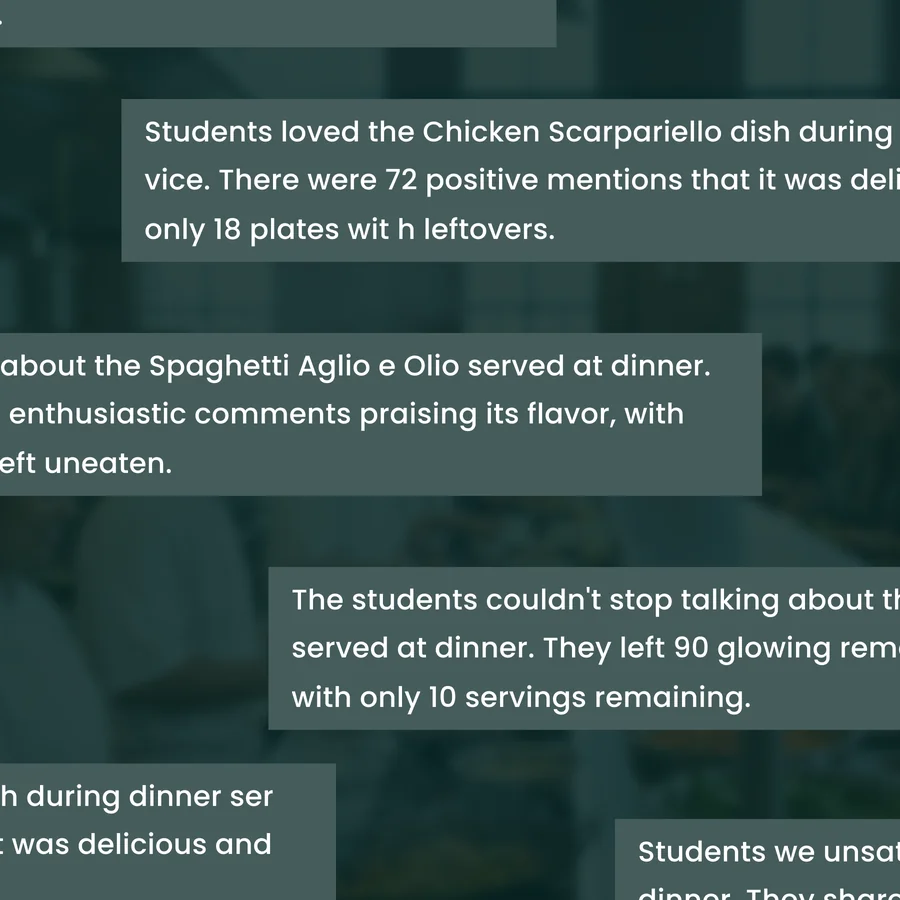
The "Why" Behind Waste
Pinpoint if mac and cheese was tossed because someone didn’t expect pimento or they were too full.
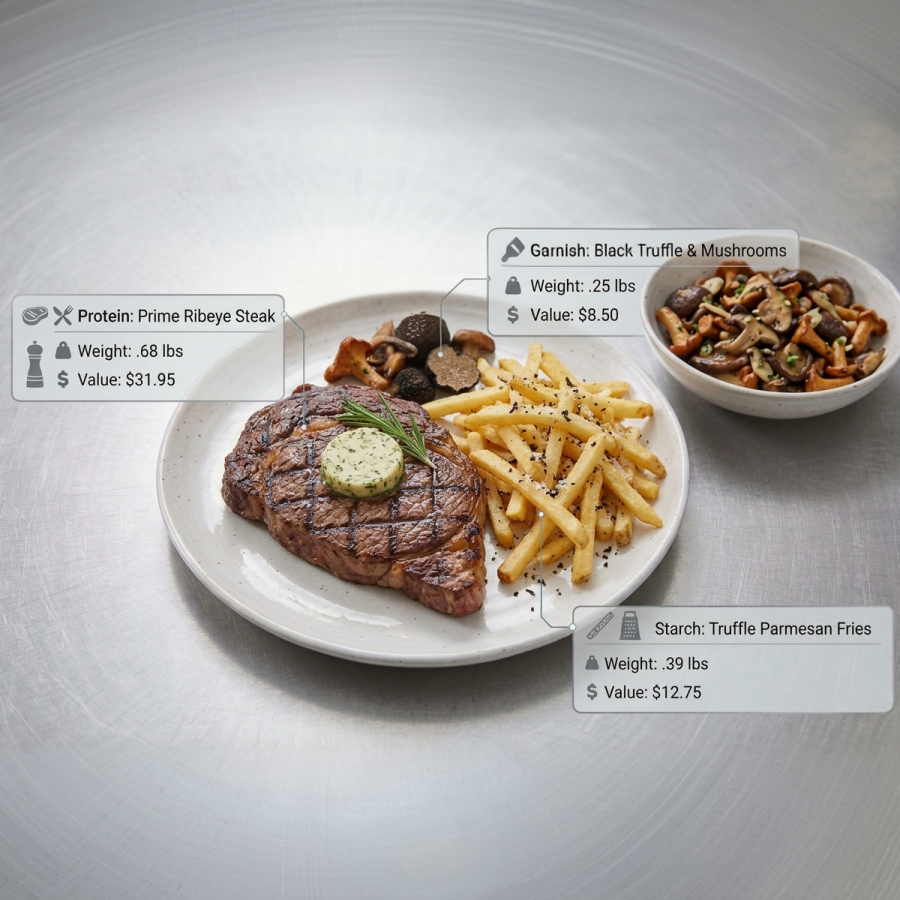
Confident Menu Tweaks
Ensure more of the food you purchase and prepare gets eaten; servings and menu adjustments are based on actual diner behavior.

Awareness without Blame
Students see their waste impact and can answer menu-specific questions. Show your campus you’re listening, not assigning fault.
An intelligent system that runs itself
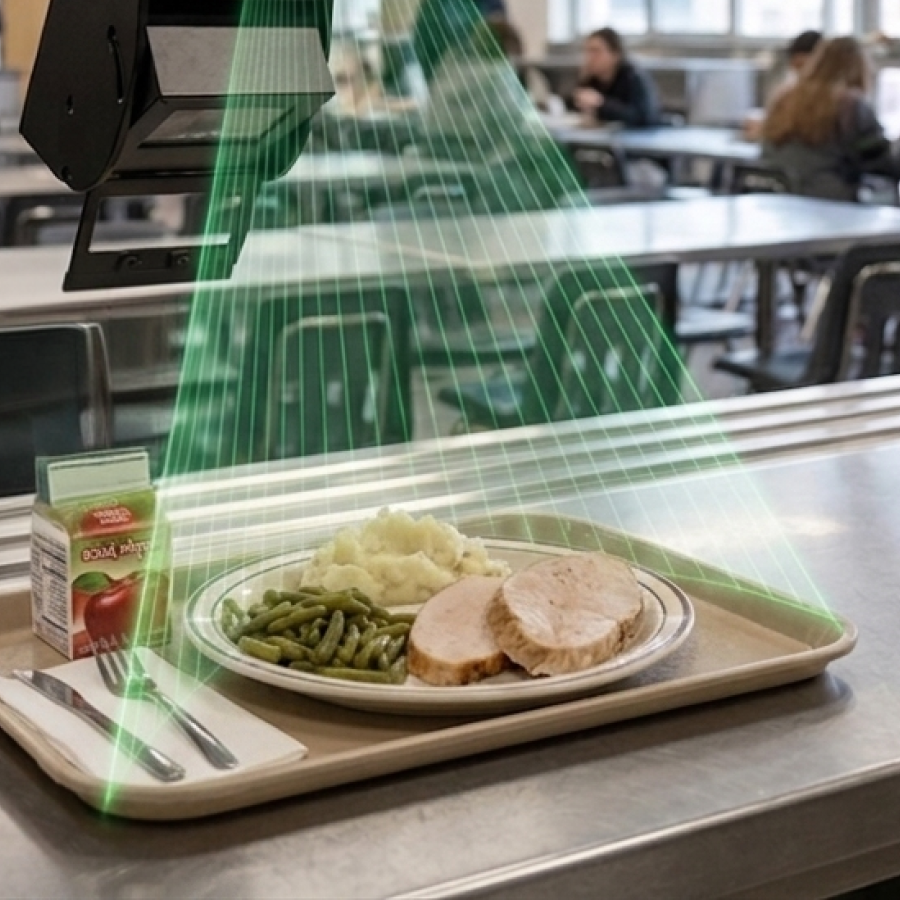
Plates are Auto-Scanned
Diners drop their plates on the dish belt (multi- and single-level both supported), business as usual. Vision AI scanners record passing plates and determine which menu items, and how much of each, are left. Data is gathered without adding any tasks.

Students Engage
On a nearby kisosk, students can see food waste stats and respond to menu-specific questions, like “How was the level of spice in the Pad Thai today?” or “What kind of cookie is your favorite?” This gives chefs the full plate waste story.
.webp)
Insights are Delivered
Weekly reports summarize top wasted items, surface relevant feedback, and provide operational suggestions for chefs and key stakeholders (like dining directors or sustainability teams).

Our solutions work better together
Add Plate Waste to your existing Topanga stack to maximize dining sustainability and efficiency.
Already using StreamLine?
Connect your service results to what's coming back on the belt to expose all budget drains and make the most impactful changes.
Already using ReusePass?
Extend engagement to dine-in. At kiosks, students see the proven impact they’ve had on all forms of dining waste.
Using both?
Plate Waste addresses the final major source of dining waste. See BOH intelligence, FOH waste reduction, and reusables adoption in one place.





.png)