.svg)
.png)
What We Learned from ReFED’s Food Waste Innovation Webinar
ReFED recently hosted a webinar to discuss the future of food waste innovation. From smart refrigerators to state and federal legislation, here are the opportunities and roadblocks shaping food waste innovation in 2026.

30 to 40% of the food supply in the United States is wasted, and food waste is the single most common material sent to landfills or incinerators. It’s no surprise, then, that so many private companies, policy organizations, and higher education institutions are seeking innovative solutions to this enormous challenge.
The good news is there is a lot to be hopeful about. We recently attended ReFED’s Learning Lab webinar, Emerging Trends in Food Waste Innovation, to learn more about how organizations are tackling food waste, where the panel shared insights from their area of expertise, ranging from food waste policy to consumer electronics. We closed the Zoom window feeling hopeful that positive change will only accelerate from here on out.
Here’s what the panelists had to say about developments in food waste innovation.
Upcycling models are evolving
More organizations are turning to upcycling. Food upcycling is one of the three most environmentally-friendly ways to reduce food waste, behind source reduction and donation.
Angel Veza, Director of Innovation at ReFED, said that she’s been seeing an evolution of upcycling models. “We’re seeing a shift away from single product pathways towards technologies and methodologies that can convert a range of byproducts into industrial outputs,” she said. Angel also explained that it’s a compelling trend from a funding perspective, as it opens up multiple end markets and reduces demand-concentration risk.
But it’s not a trend waiting to be realized—these types of companies already exist, and they’re making a difference. For example, Genecis uses organic waste to produce PHA, an alternative to traditional plastics. The company works with businesses to de-risk their transition to more sustainable products by incorporating PHA into product designs.
But for these kinds of innovative companies to become the norm rather than the exception, the whole system needs to start pulling in the same direction. “What’s really top of mind for me is accelerating adoption and impact. If we can activate that broader system around better data and transparency, supportive policy signals and economic initiatives, then we have the conditions in place for capital to flow more confidently, and solutions can move from pilot to broader implementation,” Angel said.

Combatting food waste at home
Consumer food waste accounts for nearly 50% of surplus food, costing a shocking $261 billion. So, what are consumer electronics brands doing to help their customers reduce food waste? Michael Wolf, CEO and Co-Founder of The Spoon, is seeing some promising developments. “I’m starting to see some early signals of hope in the large consumer electronics [space], particularly appliance manufacturers who make refrigerators like LG, Samsung and Hisense,” he said.
Manufacturers are being pushed in that direction, partly because of developments in the broader macro environment. With food costs continuing to rise, consumers are taking food waste more seriously. Case in point: the annual cost of food waste for a family of four is $2,913, or $56 per week.
Reducing food waste with smart appliances
To help households minimize these financial losses, manufacturers are integrating smart tools into their products. For example, LG’s smart fridges help consumers waste less food each week through a range of innovative features, including:
- Built-in food tracking systems to monitor expiry dates and receive notifications when food is about to go off
- Interior cameras to check your fridge’s contents via your smartphone while shopping, to stop duplicate purchases
- Enhanced cooling technology to keep food fresher for longer
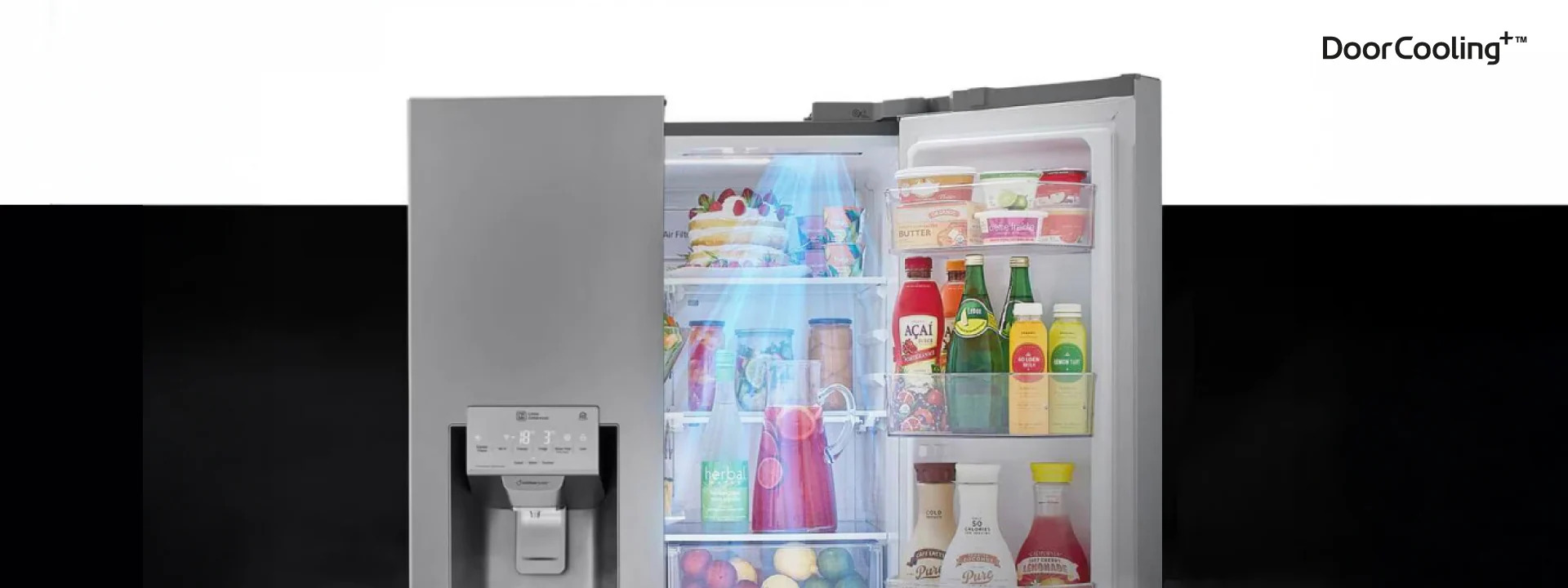
These features are a great starting point, but the panel pictured even deeper integration down the road. Moderator Katie Stebbins, Executive Director of the Food and Nutrition Innovation Institute at Tufts University, pictured a “house of the future” where smart refrigerators use expired food to create a closed-loop backyard system that significantly reduces or even eliminates food waste. Until then, these smart appliances are giving households ways to take a bite out of that $261 billion problem.
Investment in food waste technology
Paula Luu, Managing Director of BioCycle, a publication covering composting, anaerobic design and organics recycling, had some interesting insights on the investment side of things. “I think understanding and creating the transparency, [using] data sets to understand volumes and what is possible with specific streams of food waste is really unlocking both innovation as well as investment,” she said.
Securing investment
But securing that investment is another story. As Katie pointed out, food waste startups face a notorious ‘valley of death’ situation, just like any other tech vertical. To get solutions off the ground and scale them, the industry needs the right capital stack. “Different forms of capital are better applied to the different pockets of innovation… EPR funding will be providing grants… and venture and private equity for more advanced solutions,” Paula said.
Beyond traditional funding routes, some businesses are getting started by sharing resources to lower the barrier to entry. Paula pointed to a working group emerging from the Institute for Local Self-Reliance (ILSR) that helps community composters form cooperatives to reduce operational costs.
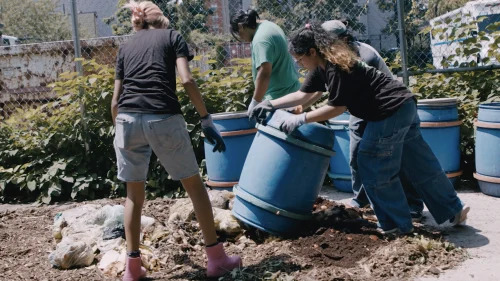
As Paula noted when she discussed EPR grants, some of the most beneficial funding doesn’t come from VCs or private equity, but from legislation.
Food waste policy: the engine driving innovation
A wave of state and federal laws is targeting the food waste crisis. Yvette Cabrera, Director of Food Waste at the Natural Resources Defense Council (NRDC), pointed out that innovation and policy must come hand-in-hand. “There are more and more [food waste] bills being introduced every year, more jurisdictions coming into play and more momentum building,” she said.
Yvette explained that this new wave of laws is what sets the stage for real change to happen. “Policy may not look like innovation to many people, but we know through the work we’re doing that when policy is designed well, it can really be the engine that drives innovation.”
She backed up Paula’s point that data is needed to significantly reduce food waste across the US. “It only really works if we ground it in strong data, and if we set up guardrails within the policy to block against bad solutions to things that could stifle innovation in the long run,” she said.
The impact of food waste policies
Yvette explained that food waste diversion policies were exciting because they didn’t mandate one specific solution. “With this approach, we’re not necessarily prescribing a single solution when we say you can no longer send your food scraps to a landfill or incinerator. We’re essentially setting a target and then letting innovation flourish,” she said. “We’re saying find something that works for you.”
Yvette also shared that research commissioned by the NRDC on a proposed Illinois food waste diversion policy was projected to generate 14,000 jobs, $3.8 billion in industry activity and $172 million in tax revenue. “It shows this isn’t just an environmental policy. It’s an economic development policy,” she said.
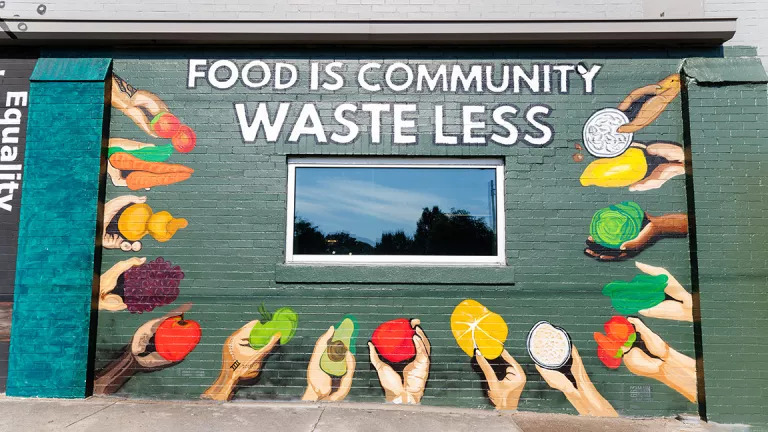
LeAndra Crystal's ‘Food is Community, Waste Less’ mural at the Turnip Truck Natural Market in Nashville; source
The data problem holding food waste innovation back
The fight against food waste has a big roadblock: access to reliable data. Because food waste happens at every single stage of the supply chain, getting an accurate picture of the problem is inherently difficult.
Investor confidence
Angel pointed out that this creates a big hurdle for innovators. “The challenge with surplus food and food waste generally is that it’s highly fragmented and geographically dispersed—it’s really hard to aggregate consistent volume and quality,” she explained.
The unpredictability has a domino effect. Without reliable data, it’s hard for solutions to run efficiently and plan for long-term impacts. And for investors, Angel noted, “that’s going to create a real supply risk and then eventually become a revenue risk.”
The cost of data transparency
Even when data is available, collecting and sharing it is a resource drain. For a small business or startup, the time and financial cost involved can be a barrier to entry. Katie touched on the equity issues this creates.
If smaller startups and entrepreneurs are walled off from expensive datasets, the entire ecosystem suffers. “We can only be as innovative, I think, as [our] access to this information [allows],” she said.
The ultimate catalyst for food waste innovation? Working together
The webinar drove home the fact that no single organization can solve the food waste crisis alone. Whether it’s opening up data silos or funding enabling policies, it needs to be a coordinated effort. As Angel said, no matter where you sit in the ecosystem, the goal should be to help de-risk adoption and make it as easy as possible for others to say ‘yes’ to food waste innovation.
It was a really interesting session, and we came away with a lot to think about. If you missed it, you can watch the webinar here.
Continue reading

A Chef's POV: Managing With the Same Precision You Cook With
Chef Chris Aquilino draws on 35 years in kitchens to unpack how culinary leadership has changed. For the chefs who thrive today, systems are just as important as skills: getting data, improving demand forecasting, and sharing the knowledge across the team.


Why Tracking Waste is Just the Start, Not the Solution
Trustworthy production data is a kitchen's foundation. But it’s what happens next—how (or if) that data is used—that really makes the difference. Most tools in-market don’t make that easy enough for foodservice operators.