
.svg)
New StreamLine Features Show You How to Save
Now, chefs can more easily adjust prep, prevent waste, and increase profitability. Without sifting through spreadsheets or reviewing pages of scale data, they'll know where to focus and update menus.

For culinary teams, production planning and forecasting has long been a source of frustration—and a total timesuck. Chefs shouldn't have to dig through Excel or review pages of StreamLine smart scale data to know how to adjust next cycle's menu and avoid costly overproduction.
New AI features in our StreamLine platform lighten that load, cutting waste and padding margins without more work. Serving as your "decision engine," StreamLine's AI finds the improvements for you, revealing where (and by how much) to tweak plans.
What's New: Digestible Summaries + Prep Direction
Phase 1: Production Insights
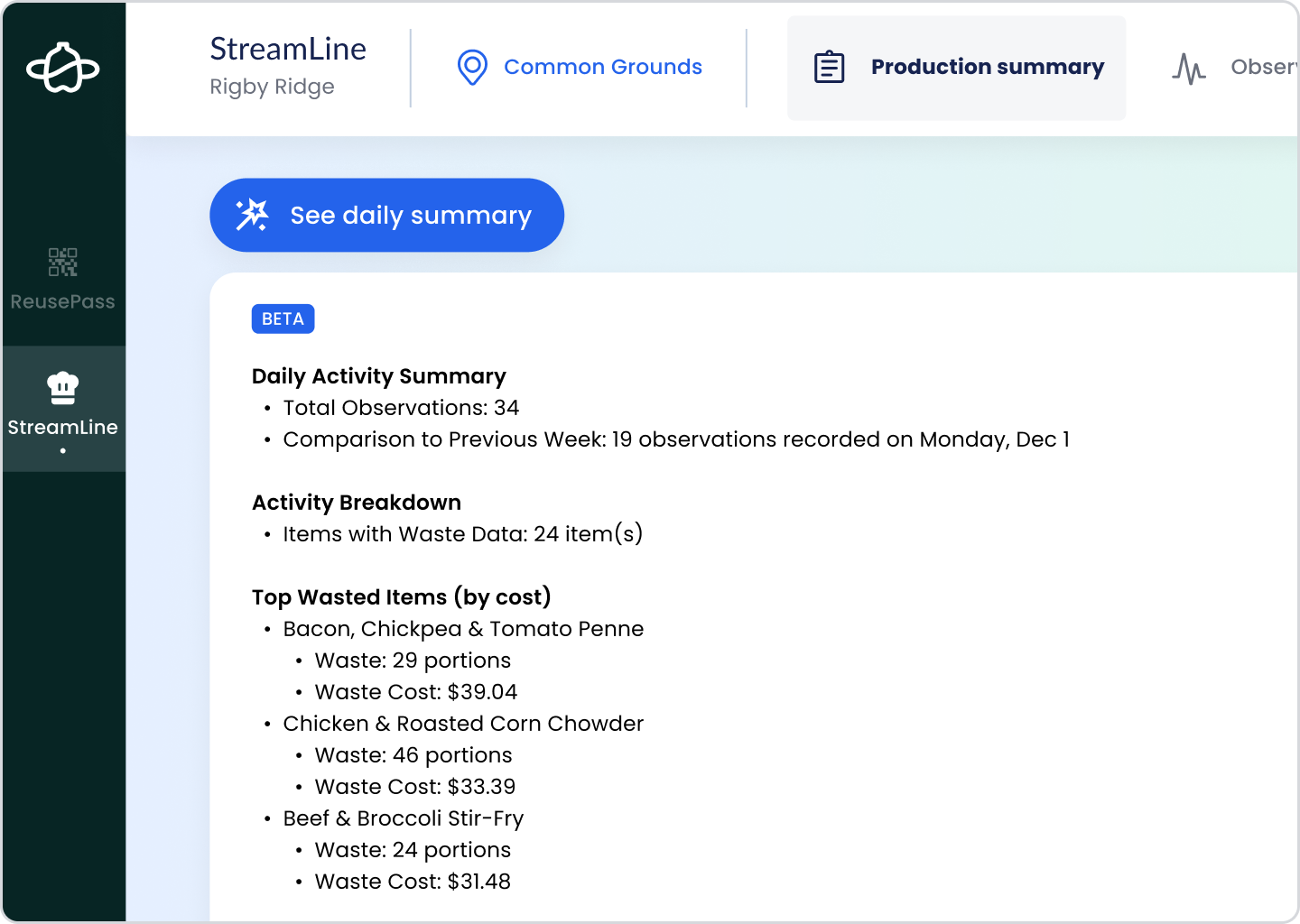
A few weeks ago, new AI-powered production overviews landed in the StreamLine dashboard. These summaries provide a quick snapshot of recent activity, trends, and suggested interventions at both the kitchen- and menu item-level.
The daily summary finds key takeaways from a given day's production data and scale usage, whereas menu item insights cover waste-reduction progress for a specific dish (like scrambled eggs).
In a new AI chat experience (connected to menu item insights), operators can get instant answers to questions about that dish—like exactly how many pounds of scrambled eggs to prep next Thursday, no number-crunching required.
%202.png)
These summaries, and the ability to explore data using plain English, keep chefs, general managers, and production managers informed without spending hours behind a desk.
Phase 2: Production Opportunities
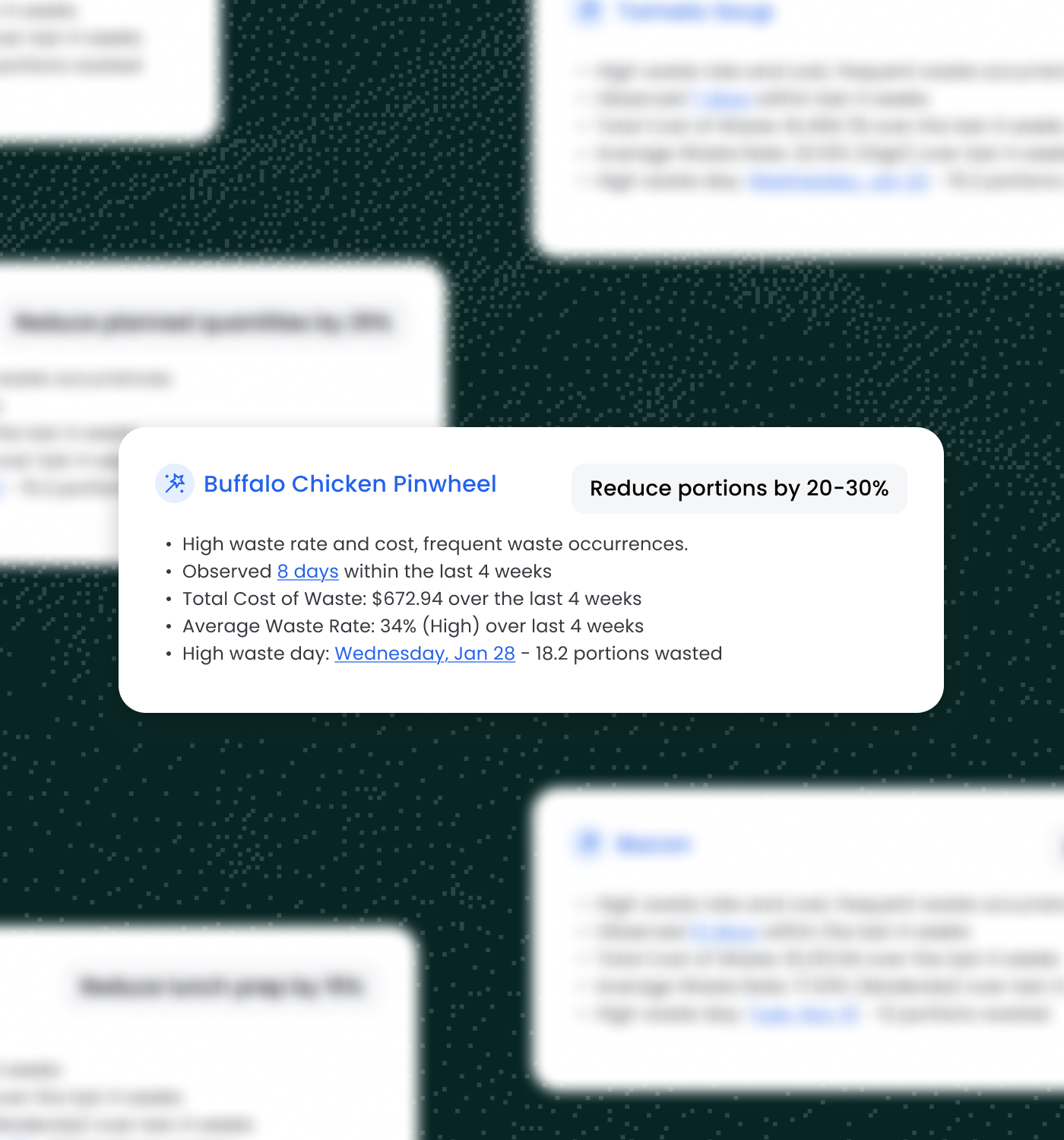
Now, teams can also see their key "production opportunities"—prep guidance for high-waste, high-cost dishes—in the StreamLine dashboard. With StreamLine's AI, scale data automatically becomes a cost-cutting, waste-squashing plan of attack.
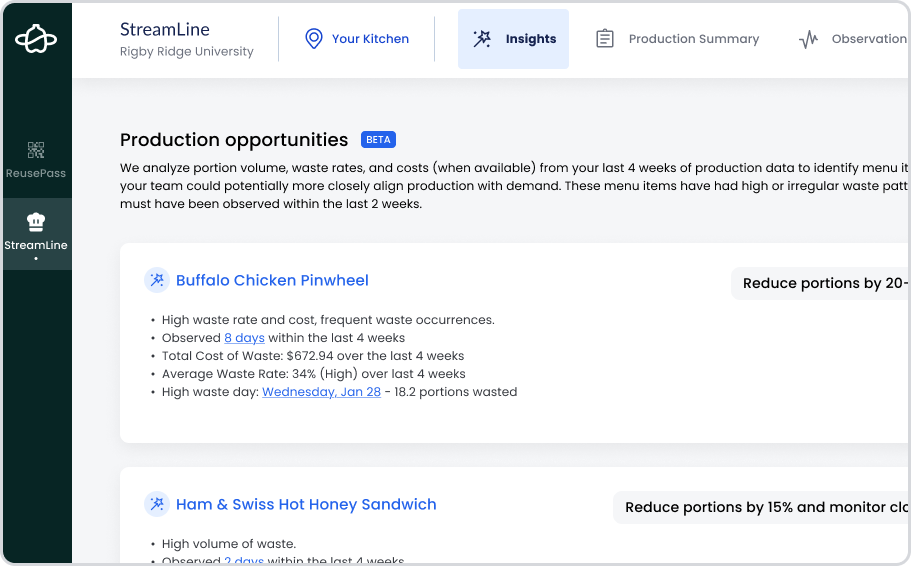
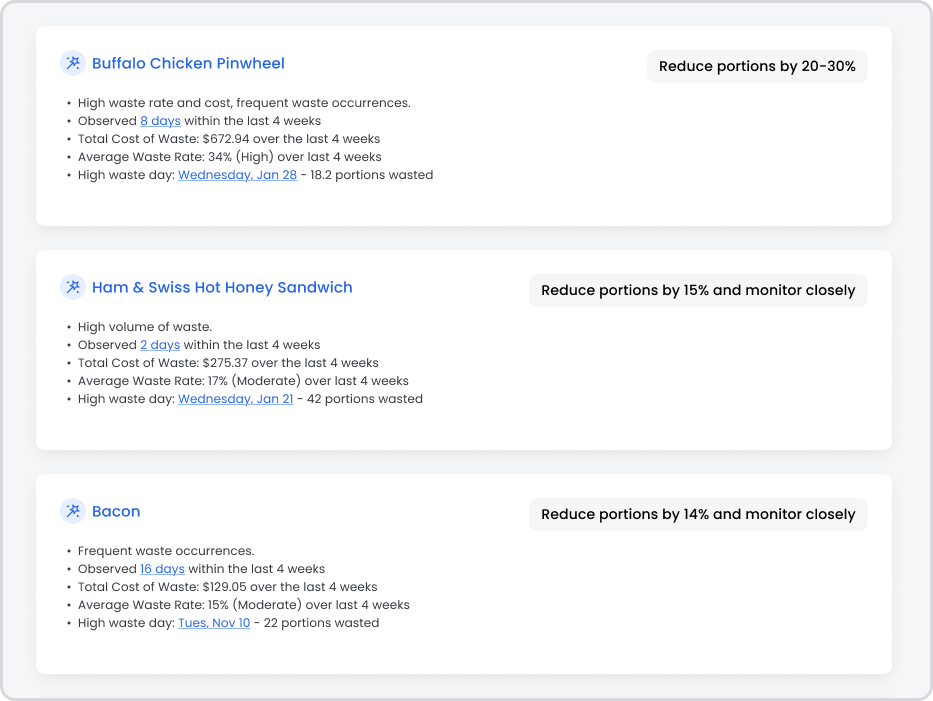
Becasue AI is doing the heavy lifting to identify gaps and suggest planning improvements, operators can focus their energy on using their data, not trying to decipher it.
Why This Matters
A system that just tracks reality won't deliver the cost, waste, and labor wins your kitchen needs. That's the biggest gap between a tracking platform and a "decision engine" like StreamLine: being shown how to improve.
These new features will:
Optimize your cost-per-plate with a clear path to savings.
Strengthen your team because staff see and solve the problems that most need their attention.
Topanga clients can already access these features in their StreamLine dashboard. If your kitchen isn’t using StreamLine yet, you can request a full walkthrough with our team here.
Continue reading

A Chef's POV: Managing With the Same Precision You Cook With
Chef Chris Aquilino draws on 35 years in kitchens to unpack how culinary leadership has changed. For the chefs who thrive today, systems are just as important as skills: getting data, improving demand forecasting, and sharing the knowledge across the team.

Why Tracking Waste is Just the Start, Not the Solution
Trustworthy production data is a kitchen's foundation. But it’s what happens next—how (or if) that data is used—that really makes the difference. Most tools in-market don’t make that easy enough for foodservice operators.