.svg)
.png)
Why Recycling Won’t Save Us
Around 460 million metric tons of plastic are produced every year, but just 9% is recycled globally. We break down why recycling alone won’t fix the plastics crisis and where the real solutions lie: elimination, substitution and reuse.

It’s a hard pill to swallow for a generation raised to recycle: we can’t recycle our way out of the plastics crisis.
Most of us want to feel like we aren’t hurting the environment. We use single-use plastics, like food containers and bottles, toss them in the recycling bin, and tell ourselves we’ve done our bit. But the uncomfortable truth is our usage is the problem. We need to put far less plastic into the waste stream in the first place, and that requires a change at a level no amount of diligent recycling can achieve.
Understanding the scale of the plastics crisis
Around 460 million metric tons of plastic are produced every year. That’s the equivalent weight of almost every registered car in the U.S. Here’s the big issue with this level of production: Globally, just 9% of plastic waste is actually recycled. In the U.S., that figure drops to roughly 5%.
It’s not a country-specific problem, either. Even in the best-performing regions, recycling rates only reach around 14%. It’s an uncomfortable truth to face, but most of the plastic ever produced has been landfilled, incinerated or leaked into the environment.
Unfortunately, the trajectory is getting worse—global plastic waste is projected to triple by 2040. If nothing changes, the plastics lifecycle will create around 19% of global greenhouse gas emissions by that same year. When it comes down to it, these statistics point to a production problem.
Why won’t recycling solve the plastics crisis?
It’s not one thing that’s holding recycling back—it’s the entire system it operates in. Let’s dig a little deeper into why recycling won’t save us from the plastics crisis:
We’re producing much more than we can handle
The plastic industry runs on a linear model: produce, use, discard. It generates waste faster than any system operating today can manage. As far back as 1989, the founding director of the Vinyl Institute told attendees at an industry conference that recycling “cannot go on indefinitely, and does not solve the solid waste problem.”
Single-use plastics sit at the heart of the crisis: products designed for minutes of use that remain in the environment for hundreds of years.
.png)
The economics are working against us
Here’s where it gets frustrating. Large-scale recycling is, for the most part, economically unviable. The costs of collecting, sorting and processing plastic waste frequently outweigh the market value of the recycled material, making it unprofitable.
Then there’s the matter of government subsidies. Governments around the world subsidize plastic production. Of the 50 new or expanded plastics plants built in the U.S. since 2012, 64% received taxpayer subsidies worth nearly $9 billion—an average of nearly $278 million per factory. When virgin plastic is cheap to produce, recycled materials simply can’t compete.
The system is confusing at best
Even where the will to recycle exists, the way the system is set up makes it difficult for recycling plants and consumers to get it right. Different plastic types require different recycling processes, which makes sorting both time-consuming and expensive. Plus, most plastics can only be recycled two or three times before they degrade too much to be useful.
On top of that, mechanical recycling also demands high levels of material purity—contaminated plastics either can’t be processed at all or get downcycled into lower-grade products.
Then there are multi-layer, multimaterial products like crisp packets, wrappers and toothpaste tubes that fuse different plastic types together into a single item, often mixing recyclable and non-recyclable materials. These are virtually impossible to mechanically recycle.
The infrastructure to support even basic sorting is also inadequate. There aren’t enough sorting facilities, and the ones that do exist are underfunded and operating well below capacity. The U.S. has no federal laws mandating nationwide recycling standards, meaning investment is fragmented and inconsistent from one state to the next.
.png)
Perhaps the most telling example of how broken the system is lies in how plastic is labeled. Those numbered triangular symbols on the bottom of your plastic containers don’t mean what you think they mean. Many people assume that the triangle means an item is recyclable, but this isn’t the case. It indicates the resin type, and some plastics aren’t recyclable. You might be tossing something in your recycling bin with the best intentions, but there’s no guarantee it’ll actually be recycled.
Fixing the problem requires moving upstream
Recycling will always have a role to play in waste reduction, but it should be a last resort, not a first response. The most effective interventions happen before plastic ever reaches the waste stream. That means moving solutions upstream through elimination, substitution and reuse.
1. Elimination: Does this plastic need to exist at all?
A surprising amount of plastic packaging exists for convenience and aesthetics rather than functional necessity—think overwrapping, excess material and redundant layers. If removing it doesn’t compromise product integrity or safety, it should go. Less material purchased means lower waste management costs and less regulatory exposure under potential future plastics legislation.
2. Substitution: Can a lower-impact material do the same job?
When you can’t eliminate the packaging entirely, the next question is whether a better material can replace it. Paper, cardboard and compostable materials can replace single-use plastic in many applications.
There’s an important caveat to keep in mind, though: substitution only works when the alternative has a lower lifecycle impact. Paper that ends up in a landfill due to contamination, or compostable packaging that gets processed through a conventional waste stream, isn’t an improvement. It’s also worth remembering that substitution addresses the material but not the model. After all, single-use paper is still single-use.
3. Reuse: The most effective tool we have
Reuse is one of the most efficient strategies for reducing both material consumption and carbon emissions. Rather than swapping one disposal material for another, it addresses the problem at a different point in the cycle by reducing the total volume of material entering the waste stream.
Despite higher initial costs, economies of scale can drive significant reductions over time. Reuse systems can deliver material and emissions savings across sectors at costs equivalent to or lower than those of single-use systems.
But there’s a condition to all of this: reuse systems have to operate at scale. Getting to that point isn’t easy—the biggest barriers to getting there are regulatory inertia and entrenched consumer habits. And that’s why change has to be systemic.
The way forward: Eliminate, substitute, reuse
The plastics crisis won’t be solved at the recycling plant. It’ll be solved by producing and consuming less plastic in the first place. By eliminating what we don’t need, substituting other materials where we can and building reuse systems that make disposal the exception rather than the rule, we can take a bite out of the plastics crisis.
Organizations are starting to take this seriously. Colleges and universities are setting ambitious sustainability goals to tackle the problem on campus. We’re seeing little pockets of change, but it needs to be systemic. For example, the dining team at Lehigh University prevented 2.1k pounds of single-use waste in just a year, while Boston University’s dining team reduced single-use waste by 78%. How did they do it? With ReusePass.
(1).jpg)
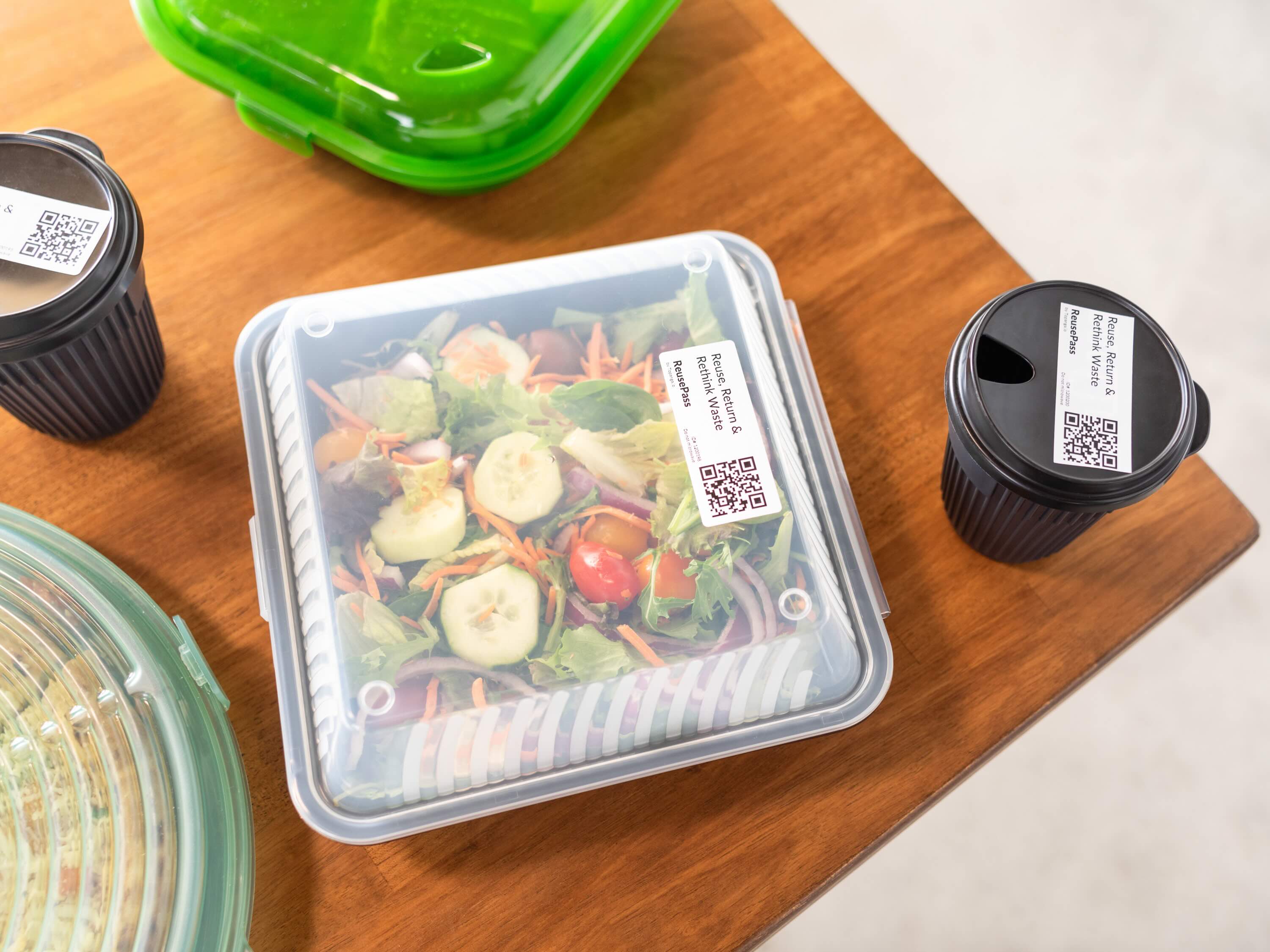
Our track-and-trace reusable container solution helps colleges, universities, senior living facilities and healthcare facilities replace single-use packaging with a reuse system that actually works, delivering a 98% average container return rate across 88+ dining partners. The result is less waste heading to landfill, lower packaging costs and a dining operation that’s more aligned with what students really care about.
Ready to leave single-use behind? Book a demo to see how ReusePass works and what it can do for your dining operation.
Continue reading

A Chef's POV: Managing With the Same Precision You Cook With
Chef Chris Aquilino draws on 35 years in kitchens to unpack how culinary leadership has changed. For the chefs who thrive today, systems are just as important as skills: getting data, improving demand forecasting, and sharing the knowledge across the team.


Why Tracking Waste is Just the Start, Not the Solution
Trustworthy production data is a kitchen's foundation. But it’s what happens next—how (or if) that data is used—that really makes the difference. Most tools in-market don’t make that easy enough for foodservice operators.