.svg)
Plate Waste is Costing Your Dining Hall More Than You Think
New research is putting hard numbers on a problem many college and university dining operators aren’t tracking: plate waste. Topanga’s new plate waste tracking solution is designed to help teams understand diner preferences and prevent overprep.

Your dining team works very hard prepping food and serving diners. But there’s a blind spot that’s draining your budget and chipping away at staff effort: the food that leaves the kitchen and comes back uneaten.
You’re not the only dining team with this problem. The foodservice industry loses around $162 billion a year to waste-related costs. Most of the industry’s waste-reduction efforts have focused on back-of-house solutions, including improved storage to extend shelf life and production forecasting to reduce overproduction. Those solutions are making a big difference, but they’re only part of the problem. The food diners leave on their plates has mostly gone untracked and unaddressed.
For colleges and universities running high-volume, AYCE buffet dining models, that gap between what’s plated and what’s actually consumed is a big drain on food budgets. The question is, what’s causing plate waste, and how do you reduce it?
Most plate waste isn’t being tracked
A new study on plate waste from Georgetown University’s Portion Balance Coalition, the Earth Commons Institute, the Menus of Change University Research Collaborative (MCURC) and ReFED found that 70% of a restaurant’s food waste is plate waste. For non-commercial operations, estimates hover around 60%. For every dollar you spend managing back-of-house food waste causes, including overproduction and spoilage, there’s a bigger financial drain waiting to be plugged in the form of plate waste.
The challenge is that it’s hard to accurately measure. Of the 20 foodservice operators surveyed in the plate waste study, every single one tracks back-of-house waste in some form. Only 20% track what comes back on the plate. It’s not for lack of caring—the main barriers were the lack of standardized ways to measure it and insufficient staff bandwidth to take on another task.
One industry expert who took part in the study made an interesting observation that caught our attention: most retail foodservice sites don’t focus on plate waste, but colleges with dish rooms are actually better positioned to (and more likely to do so). University dining already has the infrastructure: the dish return, the belt and the centralized clearing process that commercial restaurants lack.
Starches are often left behind
Across the 2025 plate waste study’s waste audits at four restaurants, starches were the most consistently wasted food category, constituting 38% of all front-of-house waste, on average; rice, bread, potatoes, fries, chips, fruit salad and dips were frequently discarded. Fruit was especially concerning because it's more expensive than potatoes, but tossed just as often.
While much of the study is based on commercial restaurants, it reveals why even small changes really matter. At one restaurant, for example, potatoes had a 21% plate waste factor, meaning roughly a fifth of what was prepped ended up as plate waste. Reducing the portion size by just 10-15% would result in $2,315 in savings annually—a small change with a big impact.
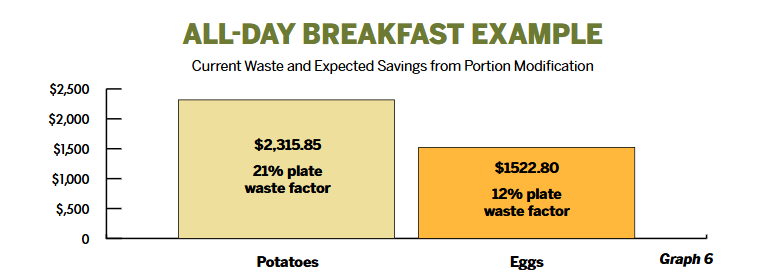
When the same high-volume items consistently come back uneaten, the cost of ingredients, labor and prep time adds up quickly.
What’s causing plate waste in higher ed dining halls?
Higher education has a plate waste problem, with higher ed dining halls wasting more than twice as much as corporate cafes. So what’s actually happening between the serving line and the dish return?
A multi-campus MCURC study across five university AYCE dining halls surveyed almost 300 students and analyzed over 800 food items to understand exactly what was driving plate waste. Here’s what they found:
Portions are too big
The amount of food on the plate was one of the strongest predictors of how much food got wasted—the more food is taken, the more food is left behind. Some food types ended up on the plate in larger quantities than others: prepared/mixed dishes and animal protein took up the most space, while fruits, vegetables and plant protein took up a smaller portion of the plate.
Diners don’t always control the serving size
When someone else decides the portion, it tends to be bigger, and bigger portions mean more waste. Nearly half of consumers say they’ve been surprised by oversized portions, and 30% wished a meal had been smaller.
Diners weren’t satisfied with the meal
Students who were satisfied with their meal wasted significantly less than those who weren’t. Interestingly, the amount of food wasted didn’t differ significantly across food categories in the study—what appeared to matter most was whether the diner liked what they were eating.
Lack of familiarity
The study found that diners who were more confident that they would like their meal before eating, likely because they had eaten the dish before, took more food but wasted less.
How dining teams can reduce plate waste
The research across all of these studies shows that plate waste isn’t inevitable. There are steps you can take to reduce it:
Start with data
The biggest barrier to addressing plate waste in dining halls is measurement; you can't solve what you can't see.
In a high-volume environment, expecting anyone to manually scan or sort plates isn’t realistic. That would inevitably lead to low utilization, resulting in limited data and suggestions that miss the mark. Tracking needs to be automatic and hands-free, like with dishbelt-mounted vision AI scanners.
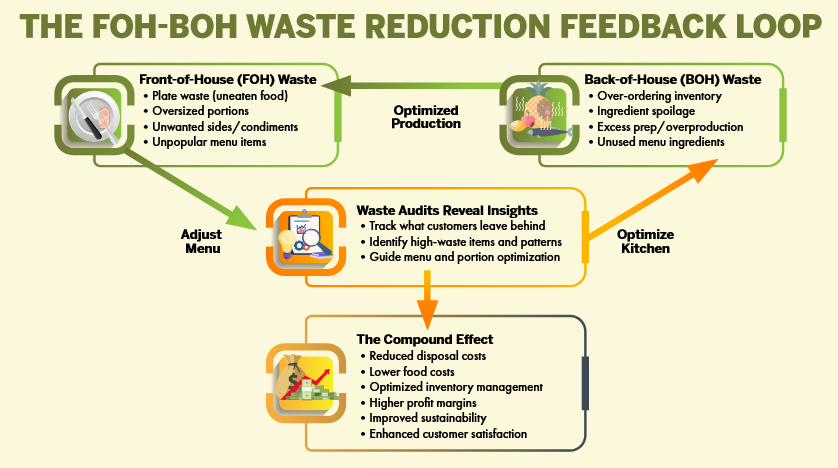
Once you can see what’s coming back, you can connect it to back-of-house planning. With that data, dining teams can adjust production volumes, rethink menu components and reduce overproduction at the source. This is what the study calls the "FOH-BOH feedback loop," and it's where savings compound over time. The result is lower disposal and food costs, optimized inventory management, higher profit margins, and happier diners.
Rethink portions and menus
Introducing customizable sizing, such as half portions, smaller plates, making sides optional rather than automatic and removing low-volume menu items that often lead to spoilage can significantly reduce plate waste. The study found that reducing portion sizes for heavier entrées and starchy sides will have a particularly big impact.
Help students make more confident food choices
Allowing diners to try a small sample of a dish helps reduce plate waste, too. A study by NDRC and Bon Appetit found that offering tasting spoons at every foodservice station cut plate waste in half, as diners could explore new dishes without committing to a full serving.
Get direct feedback from diners
Food satisfaction is one of the strongest predictors of plate waste. A camera on the dishbelt can’t tell you whether someone didn't eat their pasta because they disliked the sauce, it was overcooked, or they were just too full—but that person can.
Establishing a clear line of communication, like feedback kiosks where diners can answer menu-specific questions ("How was the pasta today?"), makes their voices heard and the full story clear.
Full visibility, prep-to-plate
For teams already using StreamLine to track service and plan production, our new hands-free plate waste offering connects what’s happening in the kitchen and what’s happening in the dining room. With the full picture, chefs can make more targeted adjustments to what and how food is served.
Looking to understand plate waste and boost student satisfaction? Let’s talk.
Continue reading

A Chef's POV: Managing With the Same Precision You Cook With
Chef Chris Aquilino draws on 35 years in kitchens to unpack how culinary leadership has changed. For the chefs who thrive today, systems are just as important as skills: getting data, improving demand forecasting, and sharing the knowledge across the team.

Why Tracking Waste is Just the Start, Not the Solution
Trustworthy production data is a kitchen's foundation. But it’s what happens next—how (or if) that data is used—that really makes the difference. Most tools in-market don’t make that easy enough for foodservice operators.