.svg)
Six US Colleges With Zero Waste Strategies
More colleges across the US are setting zero-waste goals. Here’s how six institutions are making it happen, from dining halls to football stadiums.

Turning off the lights and adding a few recycling bins used to pass for campus sustainability. Colleges have bigger ambitions now.
During the academic year, college campuses operate like small cities, and that scale comes with a large environmental footprint. The average college student generates around 640 pounds of solid waste every year, including roughly 500 disposable cups and 320 pounds of paper. Multiply that by the millions of students across the US, and you start to grasp the scale of the waste challenge.
Schools across the US are tackling the challenge head-on. Driven by growing environmental awareness, student activism and new waste legislation (with more on the way), campuses are rolling out zero-waste goals. From food recovery partnerships and waste audits to composting schemes, reusable container programs and even on-campus thrift stores, colleges are proving that campuses can reduce waste.
Nationwide initiatives helping colleges reduce waste
Before we dig deeper into specific schools’ progress, we need to highlight some national initiatives that support colleges and universities with their zero-waste goals:
Campus Race to Zero Waste
Many higher ed institutions are joining initiatives to hold themselves accountable, including Campus Race to Zero Waste, an organization that has helped over 1,000 colleges and universities in the US and Canada identify pathways to zero waste on campus. The organization defines ‘zero waste’ as diverting 90% of waste from trash.

Campus Race to Zero Waste aims to:
- Motivate students and staff to reduce waste
- Generate support for campus recycling programs
- Encourage colleges and universities to measure and benchmark recycling activity
Green Restaurant Certification
More campus eateries are pursuing Green Restaurant Certification through the Green Restaurant Association (GRA), which provides a transparent framework for measuring restaurants’ environmental performance. Participating restaurants earn GreenPoints™ in eight categories:
- Energy
- Water
- Waste
- Reusables and disposables
- Chemicals and pollution
- Food
- Building and furnishing
- Education and transparency
Under this system, restaurants are awarded a star rating based on the number of GreenPoints™ they get, with 4 stars reserved for the most sustainable eateries.
Both programs help higher ed institutions make progress towards their zero-waste goals and signal to students that sustainability is high on the agenda. Let’s take a closer look at how six higher ed institutions are tackling zero-waste goals.
Colleges and universities leading the way on zero waste
Ohio State University
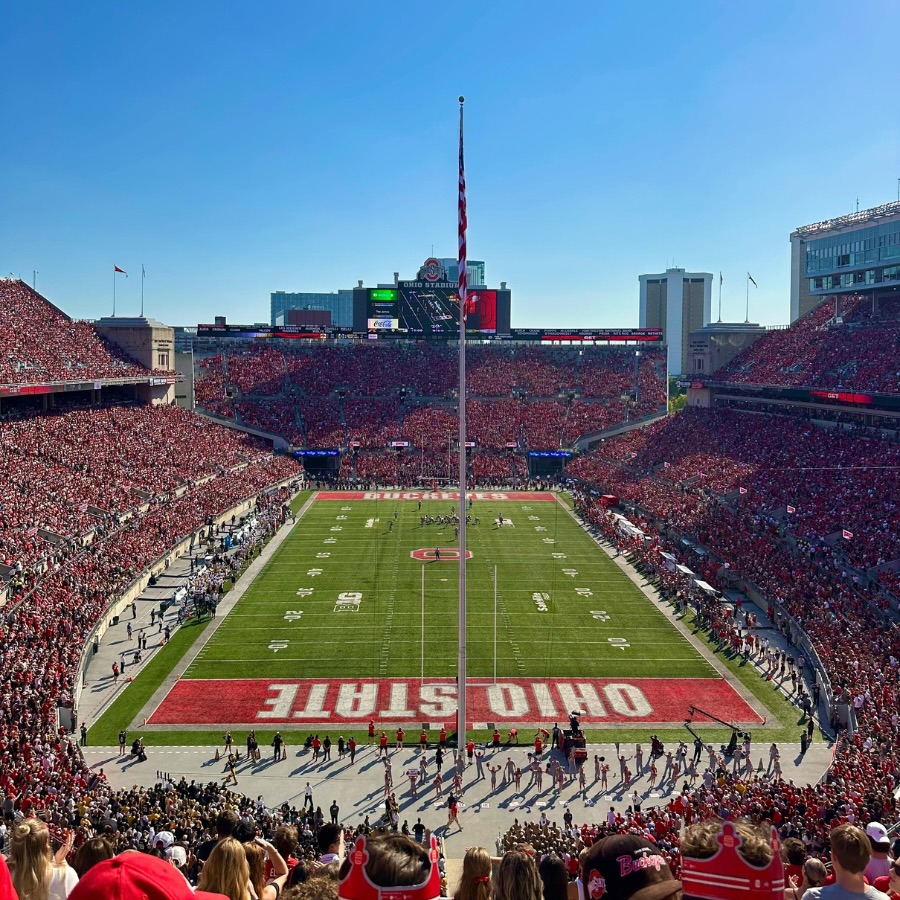
Ohio State University has been pursuing zero-waste events through a combination of recycling, repurposing, and composting to reduce landfill waste. For example, back in 2018, they piloted a program to replace paper towels in campus buildings, a small change that made a big difference.
But perhaps the most dramatic change can be seen in the university’s famous 100,000 capacity stadium. College football games are huge waste generators, producing around 50 tons of waste per game.
Ohio State has flipped that on its head, achieving almost a 93% waste diversion rate across seven football games thanks to “strong coordination among staff, vendors, volunteers, and fans.” OSU breezed past its 90% zero-waste benchmark and diverted over 257,000 pounds of material from landfill.
Boston University
Boston University takes sustainability seriously, particularly in its food operations. According to its 2025 sustainability report, Boston University Dining serves more than seven million meals a year. 1,250 tons of food waste were diverted to animal feed, composting and anaerobic digestion, while 3,100 pounds of food were donated to local food recovery organizations. Additionally, eight campus restaurants are Green Restaurant Certified.
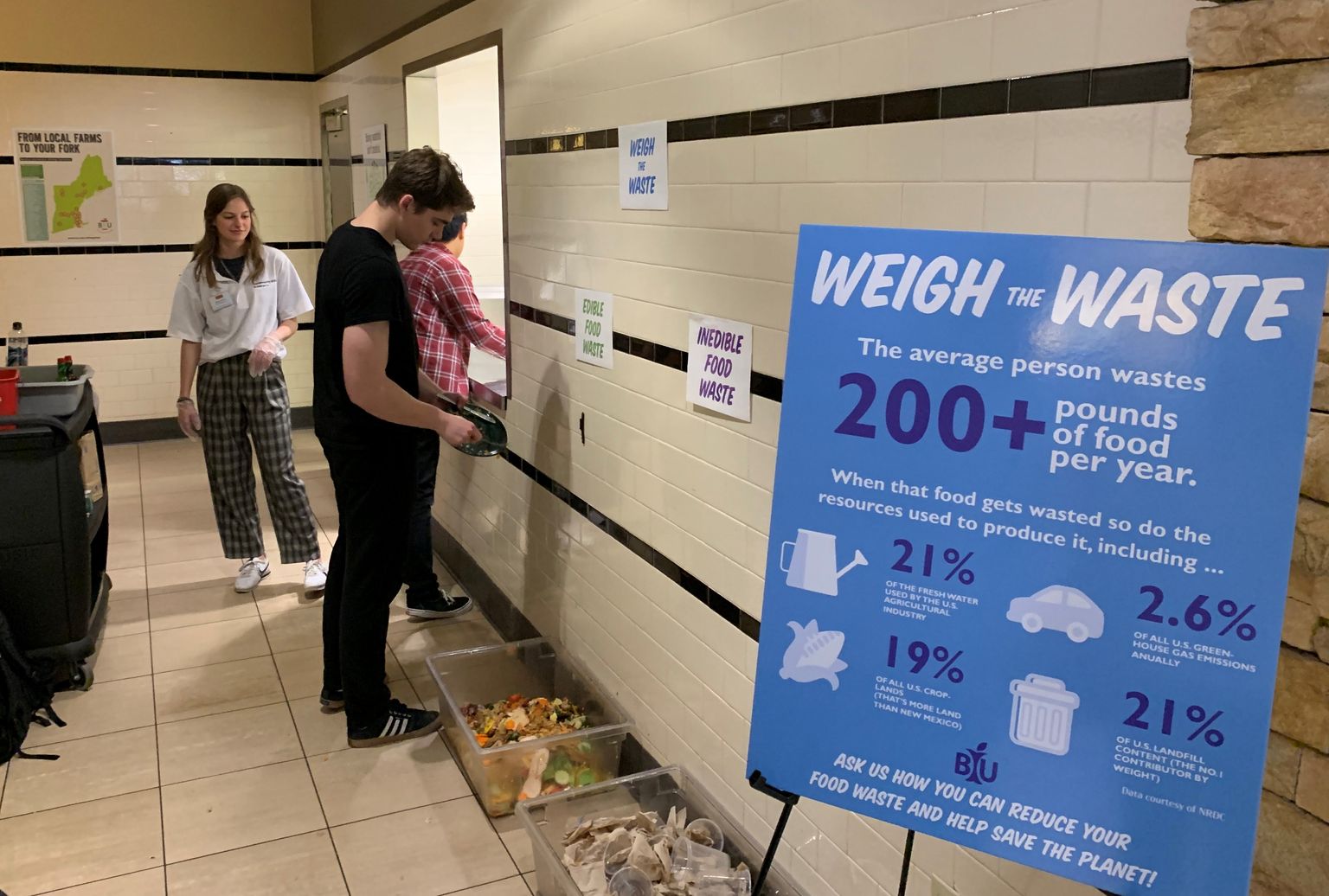
A big part of the university’s approach is preventing waste before it happens. BU Dining’s Zero Waste Guides lead ‘Weigh the Waste’ events in dining halls to raise awareness about post-consumer food waste and identify ways to minimize it. Plus, the Dining Services team and BU SPARK! developed a notification system to let students know about leftover food after catered events, reducing waste and helping tackle food insecurity.
BU Dining also uses StreamLine, Topanga’s production planning and waste prevention platform, to identify and reduce pre-consumer food waste in all dining halls. Using real-time data, the team adjusts production volumes and purchasing to reduce food waste and identify opportunities to repurpose ingredients.
Their reusable container program, Choose to Reuse (powered by Topanga’s ReusePass), has reduced disposable container use by more than 83%, and 96% of containers were returned. By doing this, the university has diverted 33,580 pounds of waste, saved 232,809 gallons of water and avoided 242,543 pounds of greenhouse gas emissions.
University of Nebraska-Lincoln
The University of Nebraska-Lincoln is aiming to create a zero-waste campus culture, and they’re doing this by embracing the circular economy. The university has several waste reduction goals, including reducing people’s waste footprint by 50% and achieving a landfill waste diversion rate of 80%. Additionally, UNL plans to increase the number of zero-waste events by 25 per year for 5 years to spread the word about waste reduction.
How are they planning to meet their goals? Through recycling, reuse and anaerobic digestion. After a survey found that 93% of respondents wanted better recycling options, the university launched the All in the Hall recycling program in 2020. Since then, the program has expanded to 107 buildings across the university.
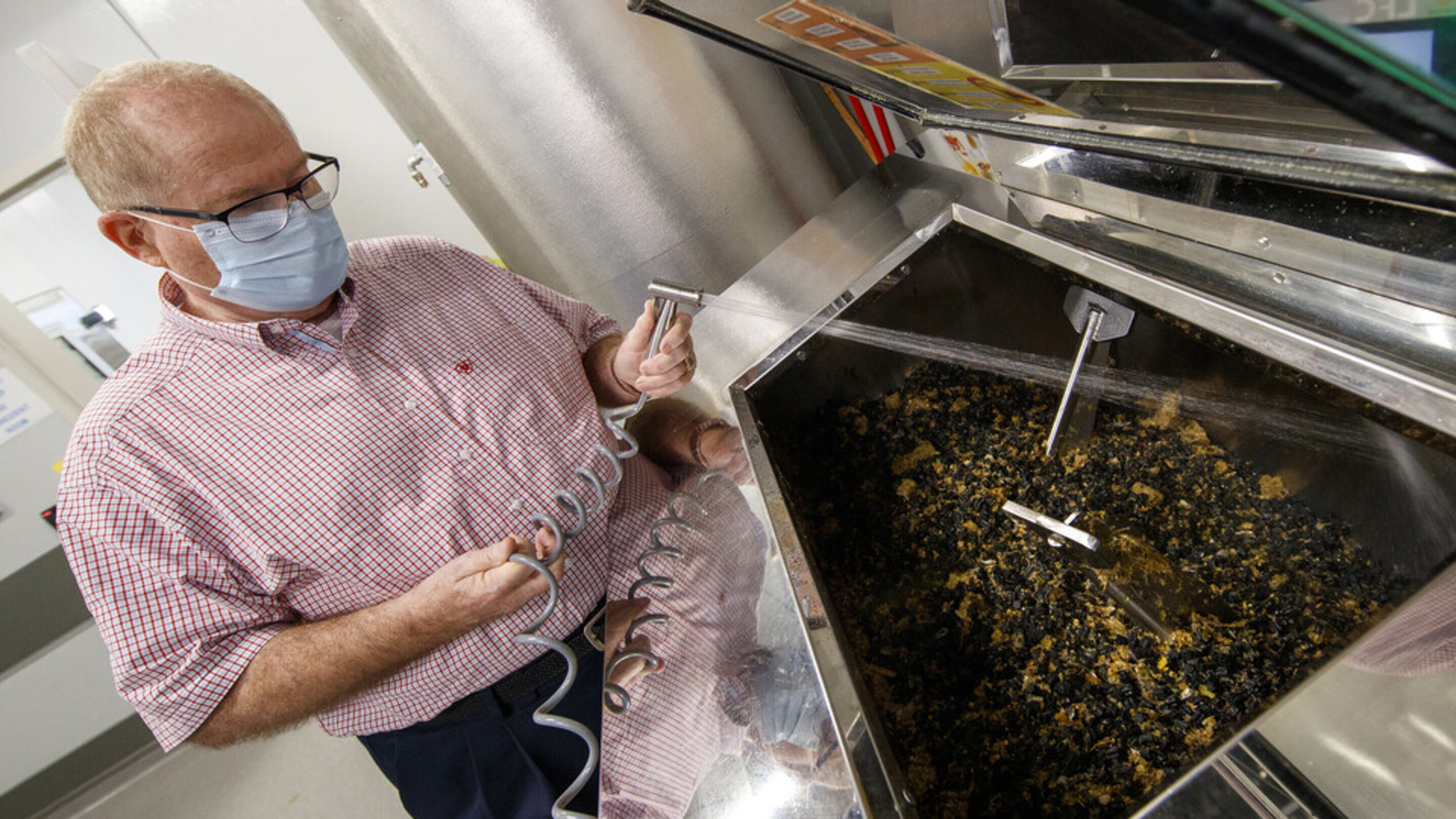
UNL Dining Services is also involved in several sustainability initiatives, including using biodigesters to divert waste from landfills and break down fruit, vegetables, meat, fish, cheese, bread and nuts. But that’s not all—UNL has a no-Styrofoam policy, and Topanga’s reusable container program, ReusePass, is helping the university on its journey to becoming a zero-waste campus by reducing single-use waste. In 2025, students recommended expanding the number of drop-off locations to make returns easier.
University of Colorado Boulder
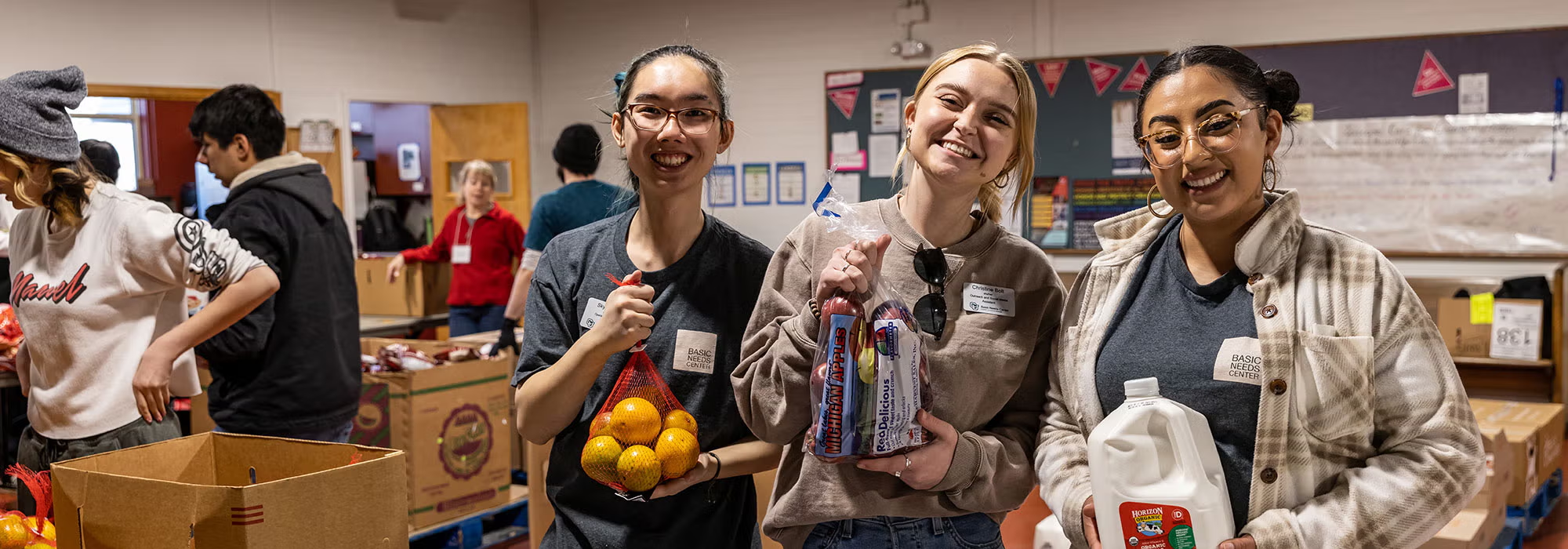
The University of Colorado Boulder is taking its commitment to waste reduction seriously. All food waste is composted or recycled, and edible leftovers are donated to an on-campus food pantry, local food rescue groups, or farms to feed animals.
2025 was a great year for sustainability at CU Boulder. The university was ranked the number one post-secondary institution for plant-based dining and sustainability by the Humane Society of the US. Additionally, the Village Center Dining at the university won the Greenest University Restaurant Award from the Green Restaurant Association after composting waste, generating electricity with on-site solar panels, and reusing rainwater for irrigation.
The sustainability wins didn’t stop there. Last July, the university signed a 10-year agreement with PepsiCo Beverages, which will eliminate all single-use plastics from beverage services, reducing waste that ends up in campus dumpsters.
University of Connecticut
UConn is on a zero-waste mission. After partnering with the Post-Landfill Action Network (PLAN) to conduct a campus waste audit, the university developed a waste-reduction strategy to:
- Standardize recycling systems
- Reduce single-use dining ware
- Expand food waste recovery
- Expand campus collection capacity of compostable materials beyond food waste

Several impactful initiatives have emerged from this strategy. For example, the Green Piece program is a reusable container system in the Student Union that reduces waste and decreases the university’s carbon footprint. Eight of UConn's campus restaurants are Green Certified, and it was the first university with the GRA to receive four-star certification at all dining halls.
To tackle food waste, UConn Dining Services isn’t putting all its eggs in one basket. Dining halls are trayless, encouraging diners to think more carefully about how much food they take (and saving water, since there aren’t trays to wash). A partnership with Quantum Organics transforms food waste into compost and energy instead of sending it to landfill; Quantum estimates that they're able to recycle 37 tons of food waste per month from UConn. Additionally, cooking oil is recycled to produce biodiesel, unused food goes to a local soup kitchen, and chefs develop recipes around ingredients that might otherwise be thrown away.
Columbia University
Columbia University aims to be a 0% waste organization, closely aligning with New York’s zero-waste goal. Its comprehensive recycling program and the continued expansion of its compost collection in partnership with the Department of Sanitation and private carting companies are helping Columbia on the road to its zero-waste goals.

When it comes to food waste, the Columbia Dining team has a two-pronged strategy: batch cooking and composting. The dining team makes food to order to avoid overproduction, while uncooked items like fresh fruit and vegetables are donated to food pantries, soup kitchens and local churches to reduce waste and support the local community.
All food scraps at residential dining locations are composted, and the campus has used compostable paper plates and bowls since 2008. Like UConn, Columbia University operates trayless dining halls to reduce food waste and water use.
Zero-waste strategies are delivering results
These six higher ed institutions show just how much progress is possible. Recycling, composting, kitchen production and optimization tools, food donations, and reusable container programs all help reduce waste. The path to zero waste may look a little different for every institution, but the results speak for themselves.
If you’re interested in more examples of how universities are cutting waste, check out our latest customer stories.
Continue reading

A Chef's POV: Managing With the Same Precision You Cook With
Chef Chris Aquilino draws on 35 years in kitchens to unpack how culinary leadership has changed. For the chefs who thrive today, systems are just as important as skills: getting data, improving demand forecasting, and sharing the knowledge across the team.

Why Tracking Waste is Just the Start, Not the Solution
Trustworthy production data is a kitchen's foundation. But it’s what happens next—how (or if) that data is used—that really makes the difference. Most tools in-market don’t make that easy enough for foodservice operators.