.svg)
Food Waste Reduction Strategies for Foodservice Operators: What’s Working in 2026
Surplus food in the U.S. fell by 1.57 million tons in 2024. We look at the policy changes, shifting consumer preferences and waste tracking tech behind this progress.

Almost a third of the U.S. food supply is surplus, and almost a fifth of this surplus comes from foodservice. The numbers are hard to take, but for the first time in years, they’re starting to move in the right direction. So, what are foodservice operators across the U.S. doing to tackle the food waste problem?
Foodservice operators are prioritizing food waste reduction
More foodservice operators are putting waste reduction at the top of their agendas, implementing strategies that are already bearing fruit.
The U.S. Food Waste Pact is proof of the food supply chain’s changing attitude toward food waste. The national voluntary agreement was formed to help food businesses achieve their waste reduction targets by moving beyond waste commitments and into action through collaboration and data-driven efforts. The pact is made up of signatories from across the food supply chain, including but not limited to Aldi, Aramark, Hilton, Sodexo, Walmart and Whole Foods Market.
Despite only launching at the end of 2023, Pact signatories are already seeing their food waste reduction efforts pay off. For example, business and industry foodservice signatories achieved a 5.7% food efficiency rate decrease between 2023 and 2024. FER looks at food waste (unutilized ingredients + overproduction) as a percentage of total food purchases. A lower FER means less food going to waste out of the food purchased. This reduction saved $15.9 million in the wholesale cost of surplus food.
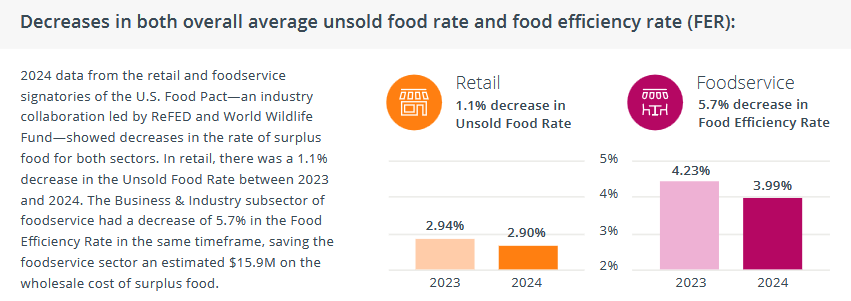
The good news keeps on coming. ReFED’s 2026 U.S. Food Waste Report found that, between 2023 and 2024, there was a ****1.57 million-ton reduction in surplus food, preventing 844,000 cars' worth of greenhouse gas emissions. However, voluntary action alone isn’t enough to tackle the food waste crisis. Some organizations need a push.
State-level food waste diversion policies are mandating change
While more businesses are stepping up on their own, a growing number of states are making food waste reduction a legal requirement–and momentum is building at the federal level, too.
At the state level
Over the last few years, states including Connecticut, New Jersey, Massachusetts, California, Maryland, New York and Washington State have introduced food waste diversion policies.
For example, in January 2026, Washington State a strict organic food waste law. Organizations that generate more than 96 gallons of organic waste per week (about the size of two rolling trash cans) must implement an organic waste management program and document the process.
The scope of New York’s food waste law just expanded, too. Organizations that generate an average of 2 tons or more per week must donate excess edible food and recycle remaining food scraps if they’re within 25 miles of an organics recycler. These state-level policies set a new standard for foodservice operations–track food waste, donate the surplus and reduce what goes into landfills.
At the federal level
Things are a little slower in Congress, but intent is there. In November 2025, Senator Cory Booker introduced the Zero Food Waste Act, a bill directing the Environmental Protection Agency (EPA) to establish a grant program to study and reduce food waste. If the bill becomes law, states, local governments, territorial governments, tribal governments and nonprofit organizations will be able to apply for grants to make sure food is kept out of landfills.
Portion sizes are getting a much-needed rethink
Portions have long been a case of ‘bigger is better,’ but a new study by ReFED and Dataassential suggests that approach is out of date. The study surveyed over 1,500 American consumers and found that, in the last month alone, nearly half of consumers were surprised by how large a meal was, and 30% wished a restaurant meal they’d purchased had been smaller. The study also found that 25% of consumers leave food behind always or most of the time. With 8% of consumers currently using appetite-reducing GLP-1 medications, businesses are thinking more critically about what the “right” portion looks like.
It’s clear that diners are ready for change. The study found that 59% of consumers would be more likely to visit a restaurant that offered flexible portion size options. The most popular formats include structured sizing (small, regular or large), mix-and-match combos and no sides options. When given the choice between three sizes of the same dish at scaled portions, the majority of consumers opted for a medium portion (56%), with the remainder split almost evenly between small (22%) and large (20%).
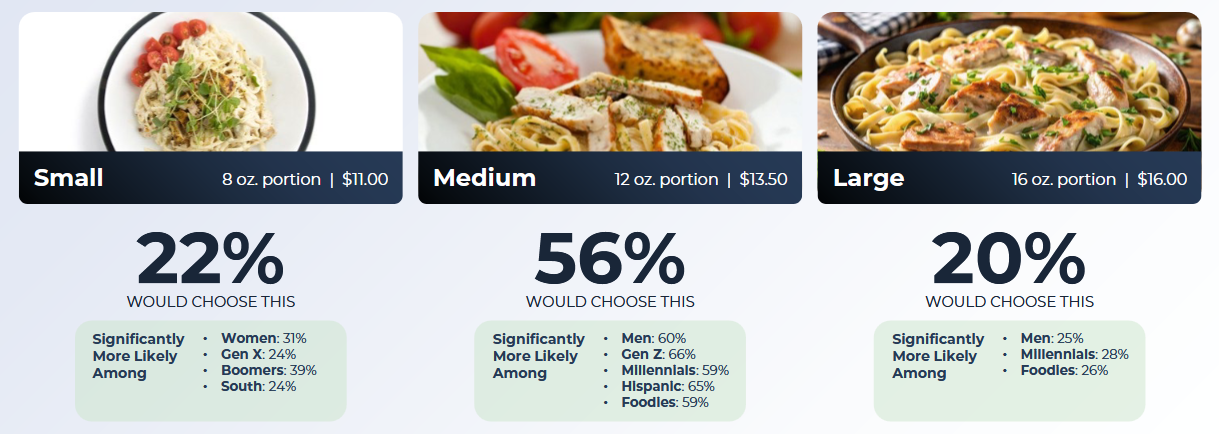
The business case is there, too. ReFED estimates that offering different portion sizes at restaurants could reduce 2.35 million tons of food waste annually while saving the foodservice sector $547 million. Right-sizing portions is one of the most effective ways to cut food waste, but it only works when operators know what to change, and that requires hard data.
Food waste tracking solutions are giving kitchens a clearer picture
Technology is helping foodservice operators get a much clearer picture of what’s being wasted and why. AI-powered systems for real-time demand planning and inventory management raised over $30 million in private funding in 2025, helping businesses better manage inventory and improve operational performance. The tools fall broadly into two categories: kitchen production tools and plate waste tracking solutions.
Kitchen production tools use AI-powered demand forecasting to help operators avoid overproduction by predicting what to prepare and how much. Plate waste tracking solutions, on the other hand, focus on what customers leave behind, which, as it turns out, is still a big blind spot for most dining operations. According to ReFED, nearly 70% of restaurant food waste comes from what’s left on customers’ plates, yet only 20% of foodservice operators currently track plate waste.
Food waste tracking technology is being deployed by many foodservice operators, with cameras, sensors, scanners and wearable devices spotting bottlenecks, generating food waste insights and cutting overproduction.
However, not many operators have implemented the back-of-house (BOH) and front-of-house (FOH) systems required to create a waste reduction feedback loop. When the loop works, benefits quickly compound–food and disposal costs reduce, profit margins increase, and customers have a better dining experience.
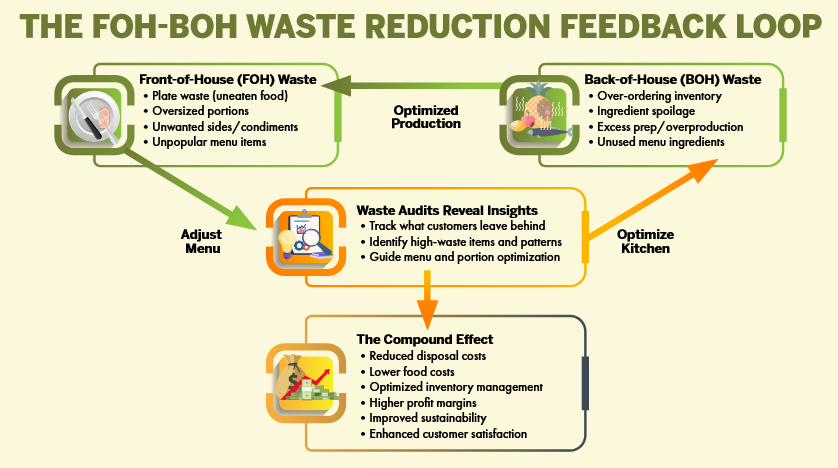
How Topanga gives culinary teams a complete feedback loop
Most foodservice operations only have visibility into one half of service. They might track what’s happening in the kitchen, but not what diners actually eat. Topanga’s StreamLine now connects the front- and back-of-house to create a powerful feedback loop that turns better data into better outcomes for dining programs.
StreamLine evolved from a back-of-house system to a suite of solutions that deliver visibility, reduce admin work, and unlock cost savings—prep to plate.
Get trustworthy service results & station forecasts
In the kitchen, worksheets aren’t working. Chefs spend hours reviewing chicken scratch and manually entering data to decode what happened during service. Orders and forecasts are then based on service “actuals” that can’t be trusted.
Here's how StreamLine Service supports the back-of-house:
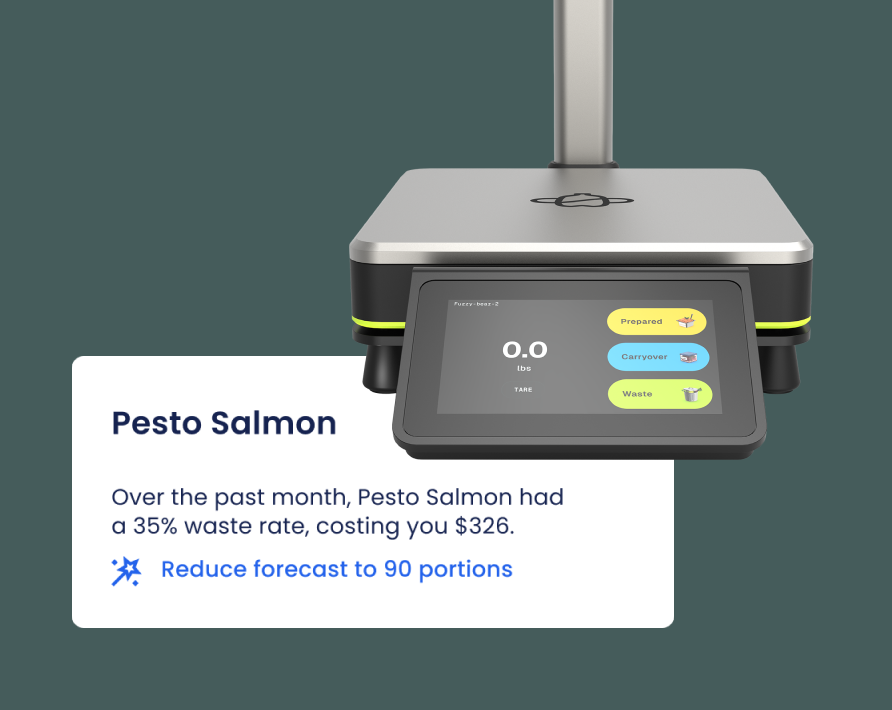
- Capture Data: A cook places a pan of food—prepared, carryover, or waste—on a vision AI “smart” scale and logs it with one tap, recording weight and an image.
- AI Takes Over: Scale data flows into the StreamLine dashboard. AI identifies the exact menu item (via integration or menu upload), cost, and pan. It gets matched to Pesto Salmon from the Mediterranian Station, not just 'fish' or 'protein.'
- Surface Insights: Orbit, StreamLine's AI assistant, analyzes recordings for wins, trends, and risks. With one click, Orbit also builds line-by-line station forecasts and flags where upcoming plans (via menu integration) don't match demand.
Bring service and plate waste data together for better insights
Seeing what happened on the line is already valuable. Paired with plate waste data—from our StreamLine front-of-house hardware—kitchens can understand real consumption, increase diner satisfaction, and see which service methods are the most efficient.
In high-volume environments like dining halls, expecting staff or diners to self-scan plates is a fast path to low adoption (and bad data). Here’s how our StreamLine Plate Waste, our hands-free solution, works:
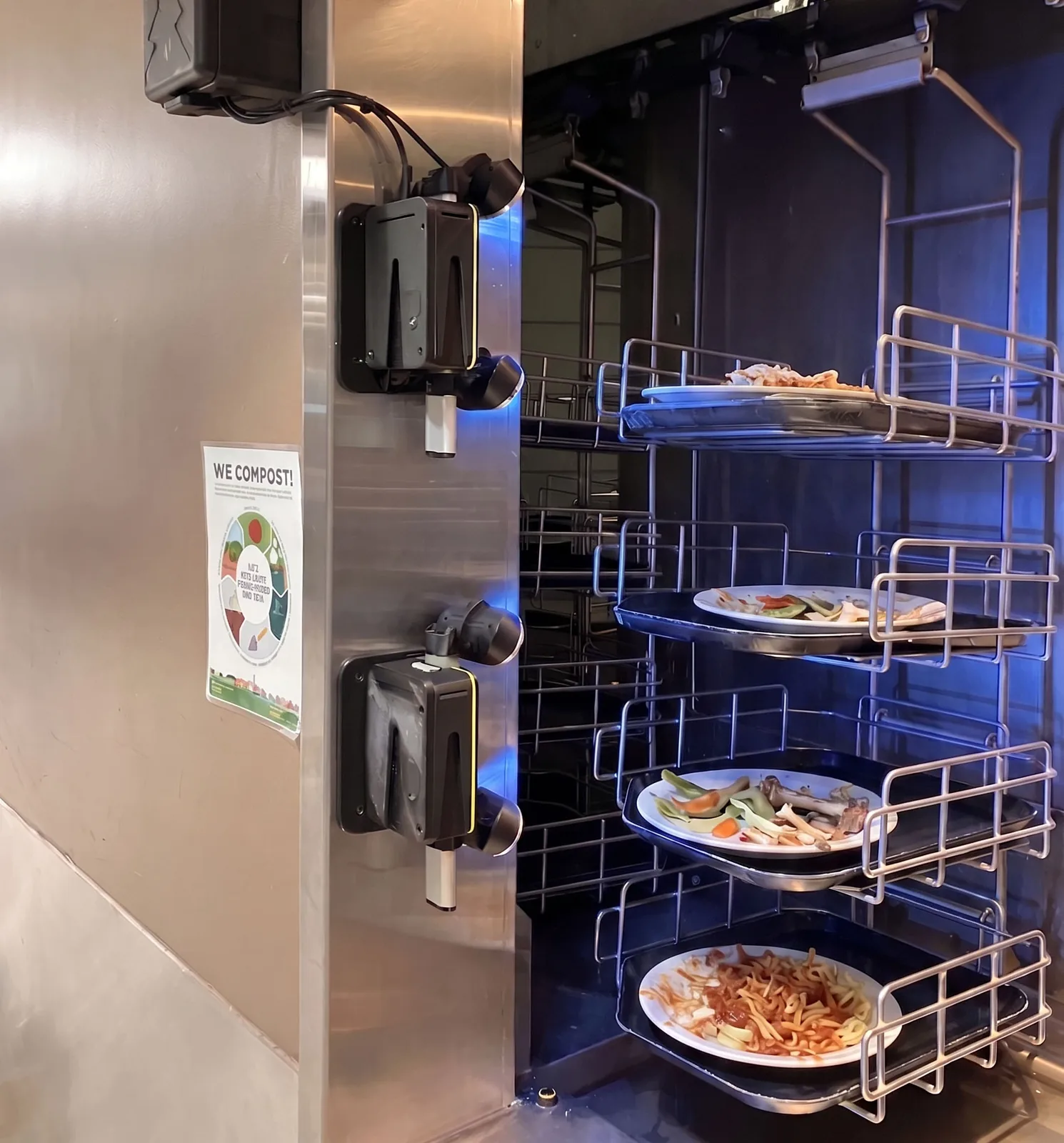
- Capture Data: Dishbelt-mounted vision AI scanners record every passing plate. AI then uses your menu data to determine what items, and how much of each, were left behind. Dining teams see what’s uneaten without any added work.
- Contextualize: A photo of a half-eaten portion of chicken can’t tell you why it was wasted— overportioned? Oversalted? Feedback kiosks give diners the option to answer menu-specific questions so the kitchen gets the full story.
- Act: Plate waste data flows into the StreamLine dashboard. Orbit answers questions on-demand; weekly reports surface problem areas, summarize feedback, and suggest high-impact portion, recipe, and service changes.
Both StreamLine Service and StreamLine Plate Waste are available as a standalone solutions for teams interested in only one half of the equation. But when brought together with service data, post-consumer insights reveal hidden budget drains and gives chefs the most accurate guidance—like how adjusting grilled chicken over-portioning at a manned station will change next week’s prep target. This protects cooks’ time, saves on food costs, and ensures that what’s made gets eaten.
StreamLine turns better data into better outcomes, prep to plate. Book a demo to see how it could work in your kitchen.
Continue reading
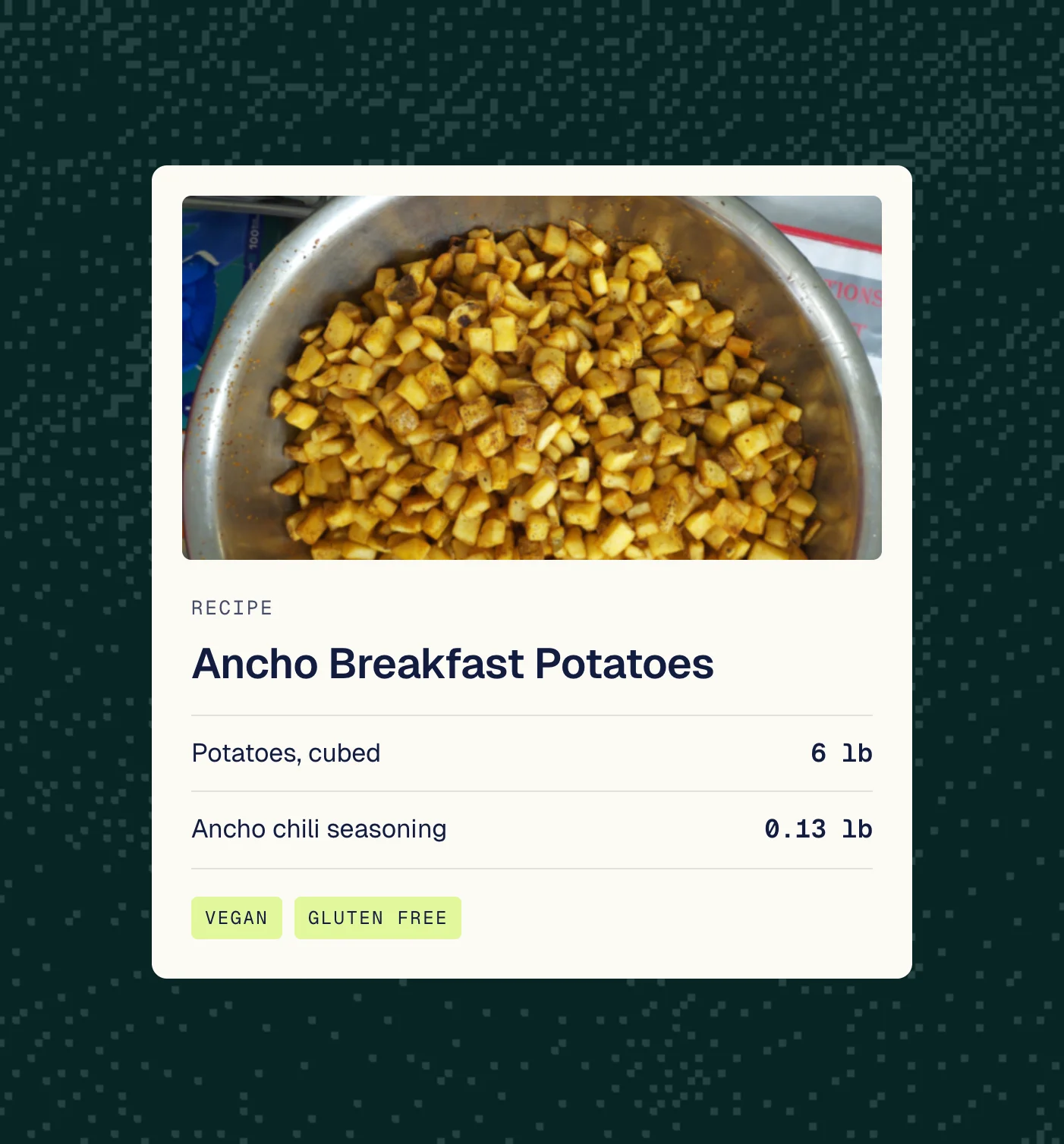

A Chef's POV: Managing With the Same Precision You Cook With
Chef Chris Aquilino draws on 35 years in kitchens to unpack how culinary leadership has changed. For the chefs who thrive today, systems are just as important as skills: getting data, improving demand forecasting, and sharing the knowledge across the team.

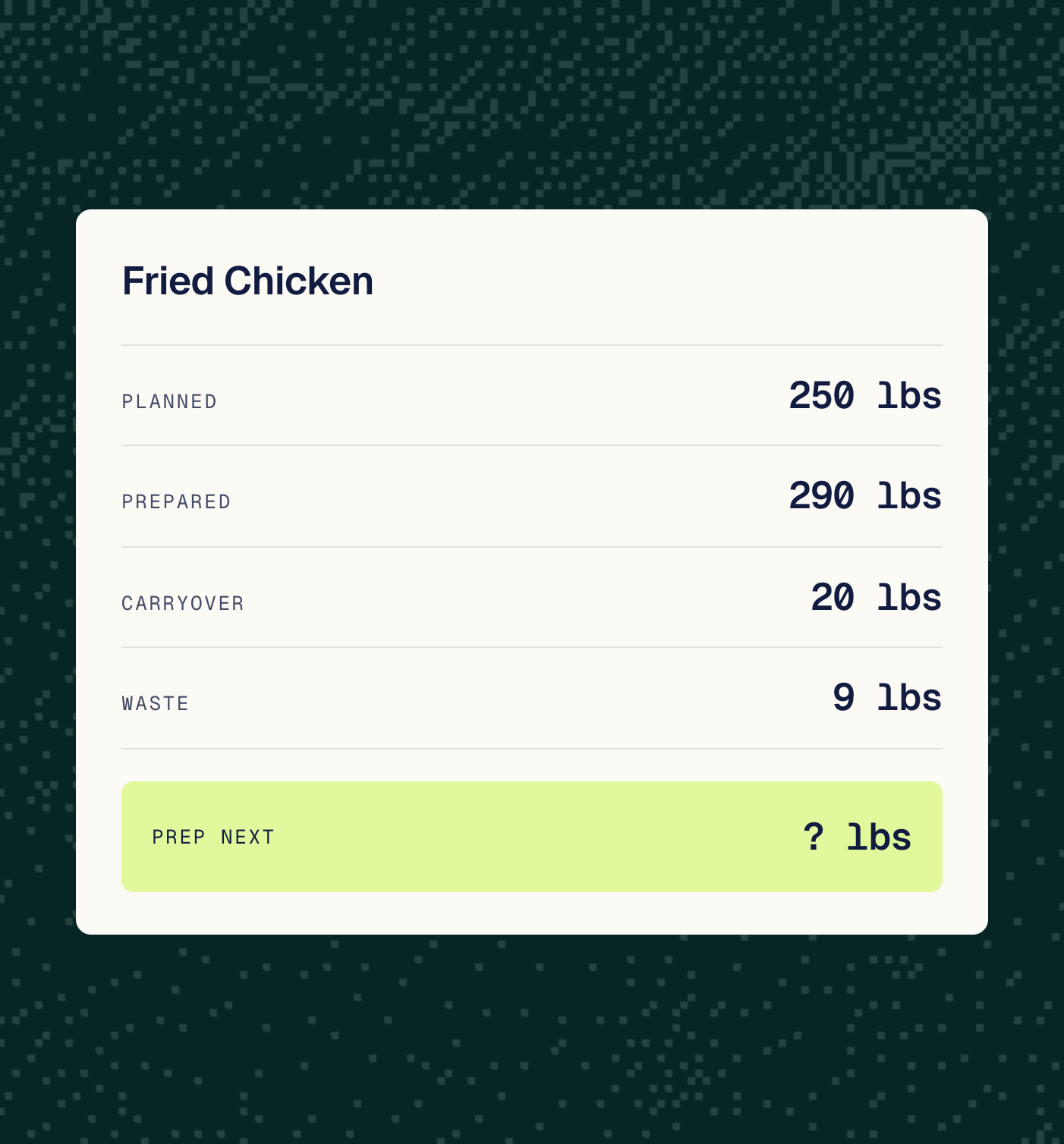
Why Tracking Waste is Just the Start, Not the Solution
Trustworthy production data is a kitchen's foundation. But it’s what happens next—how (or if) that data is used—that really makes the difference. Most tools in-market don’t make that easy enough for foodservice operators.